
Gardening in a windy spot can feel like a constant battle. I know this firsthand my own backyard sits right in a wind tunnel, and for years my plants were snapped, dried out, or simply refused to grow. After plenty of trial and error, I’ve learned that the secret isn’t fighting the wind, but designing a garden that works with it.
Here are seven practical, beautiful ideas that helped me create a thriving garden despite the gustsBuild Natural Windbreaks With Layered Planting
The biggest improvement in my garden came when I stopped relying on fences alone and started using plants as wind filters. Instead of one solid barrier, I planted layers tall shrubs at the back, medium plants in the middle, and low flowers at the front.
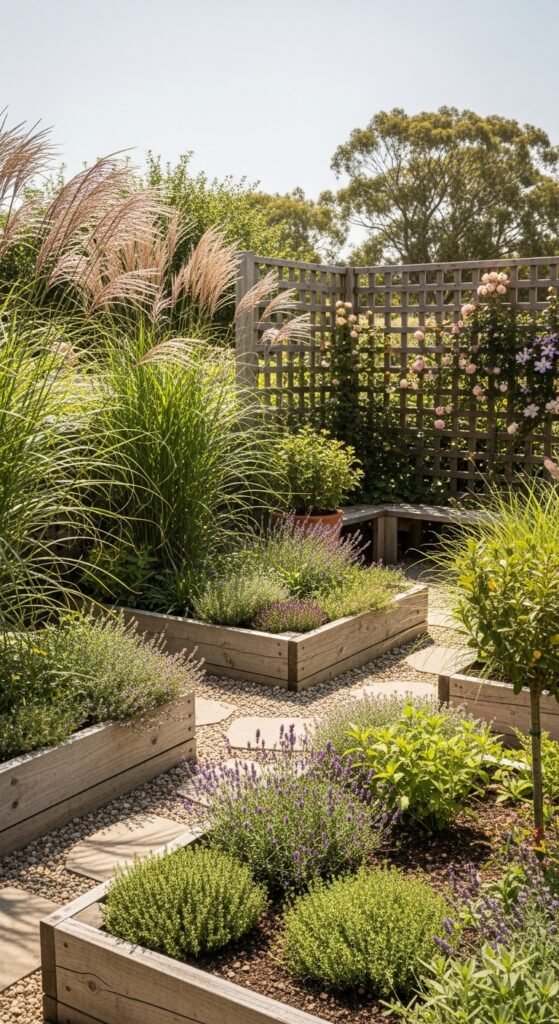
This slows the wind gradually rather than creating harsh turbulence. Hardy choices like lavender, rosemary, and ornamental grasses have survived storms that destroyed my delicate roses years ago.
Choose Wind-Tough Plants First
Not every plant is meant for breezy gardens. I used to fall in love with delicate blooms only to watch them shred in days. Now I stick to tougher heroes:
- Ornamental grasses
- Russian sage
- Sea thrift
- Juniper
- Daylilies
These plants have flexible stems and small leaves that don’t act like sails. Since switching to them, my garden finally looks full instead of exhausted.
Use Raised Beds With Protective Edges
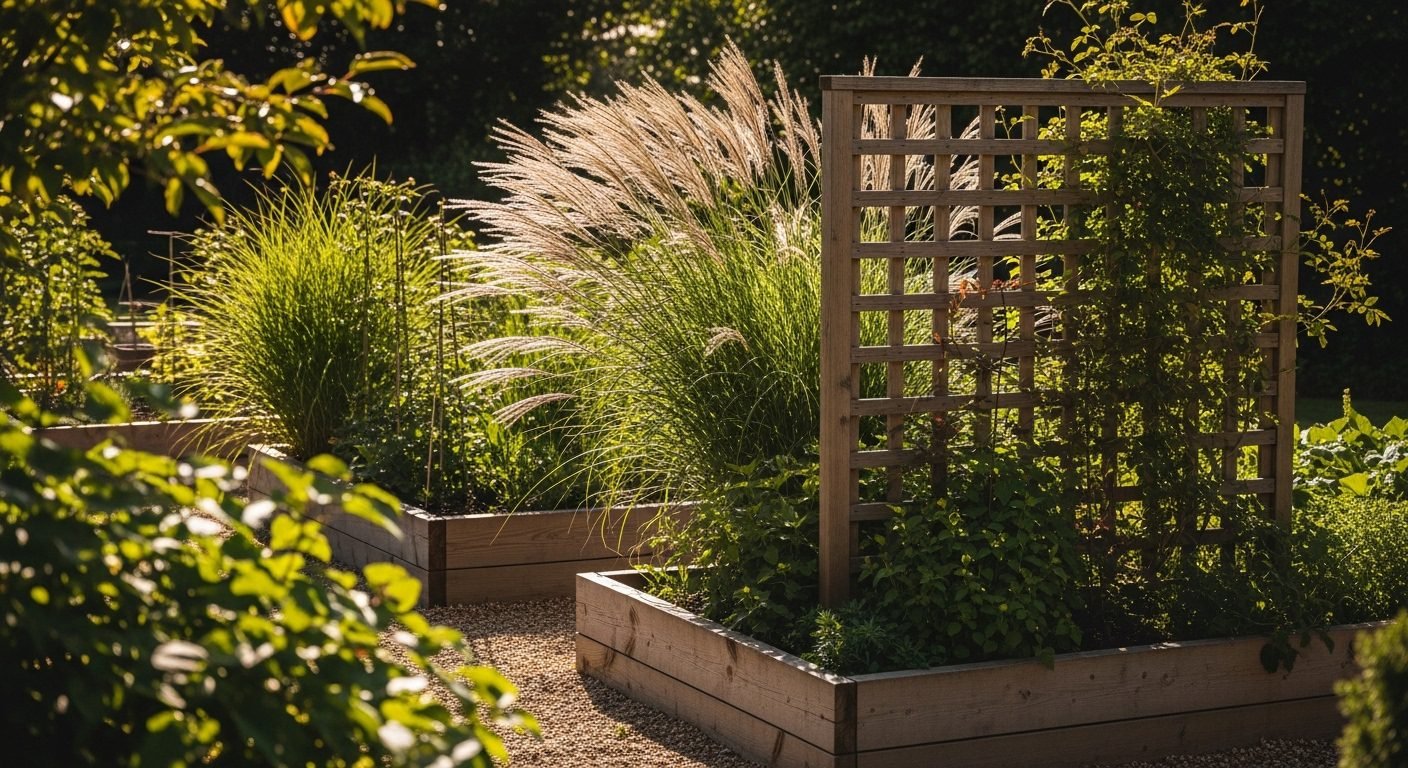
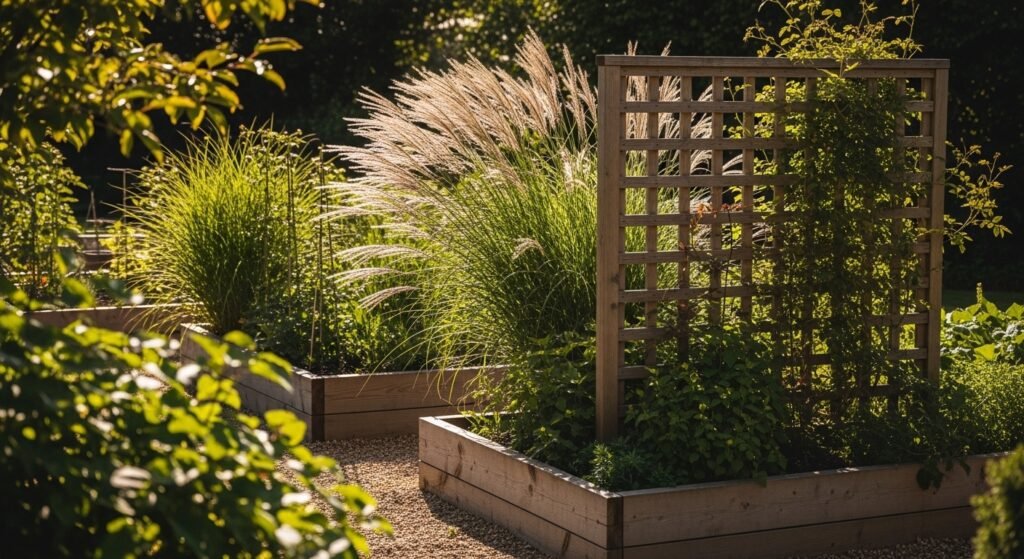
Raised beds were a game changer for me. The soil warms faster, and the wooden sides block low, drying winds. I added a simple lattice panel to the windward side, which lets air pass through without flattening everything.
A sturdy cedar raised bed kit I bought online has held up beautifully for three seasons and gave me instant structure without needing DIY skills. It’s one of those purchases I wish I’d made earlier.
Create Cozy Courtyards and Corners
In windy spaces, small enclosed areas work better than wide open beds. I carved out a little corner near the house using trellis panels and tall pots. Inside that “micro-garden” I can finally grow peonies and hydrangeas that used to suffer outside.
Think of your garden like rooms in a house each one can have its own level of shelter.
Anchor Everything Securely
Wind doesn’t just hurt plants; it topples pots and décor too. After losing more containers than I’d like to admit, I switched to heavier terracotta and resin planters. I also use a set of spiral ground anchors for young trees and tall shrubs.
They’re simple, affordable, and have saved my Japanese maple more than once during spring storms.
Mulch to Stop Soil From Drying Out
Wind steals moisture faster than sun. I noticed my soil cracking even when I watered regularly. A thick layer of bark mulch solved that problem almost overnight.
Mulch protects roots, keeps soil from blowing away, and makes the whole garden look tidy. In vegetable patches I use straw; in flower beds, dark bark for a polished look.
Go Low and Flowing Instead of Tall and Fragile
My final lesson was accepting the personality of a windy garden. Instead of forcing tall delphiniums and hollyhocks, I embraced low, flowing designs creeping thyme, sedum, and dwarf shrubs.
The result feels natural, almost coastal in style, and far less stressful to maintain. Now the wind adds movement instead of destruction.
What I’ve Learned the Hard Way
- Solid walls can make wind damage worse by creating gusty swirls behind them.
- Small leaves beat big floppy ones every time.
- Protection matters most in the first year while plants establish roots