
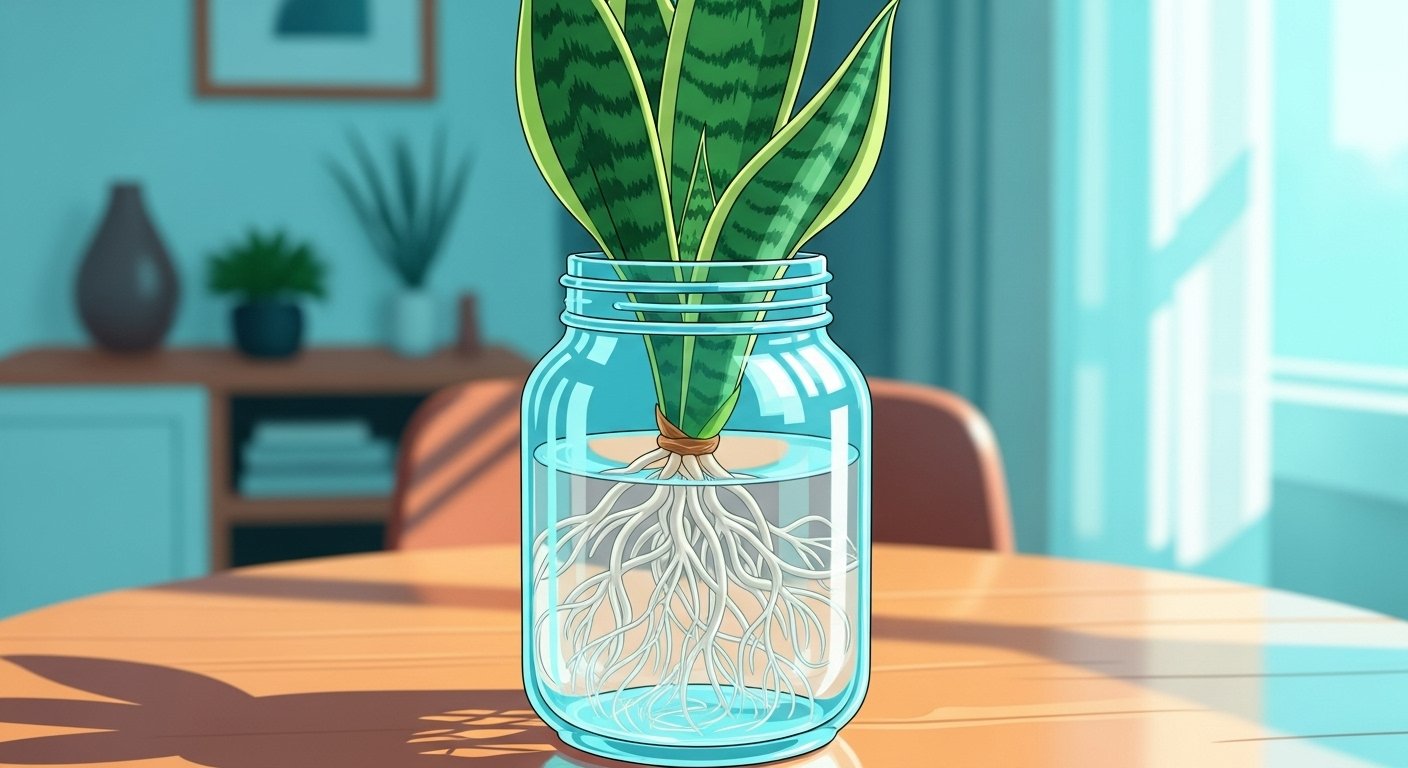
Snake plants (Sansevieria) are celebrated for their resilience and beauty, making them a favorite among both beginner and experienced plant parents. While they can propagate in soil, propagating snake plants in water is a fun and effective method that lets you watch roots develop in real time—a satisfying experience for any indoor gardener.
Whether you’re aiming to expand your plant collection, refresh your décor, or gift a cutting to a friend, this guide will walk you step-by-step through the process, share tips for success, and ensure your propagated snake plants thrive.
For comprehensive guidance on keeping your snake plant healthy while propagating, see Snake Plant Care Tips: The Complete Guide to a Healthy, Thriving Sansevieria.
🌿 Why Propagate Snake Plants in Water?
Propagating in water offers several advantages:
- Visible root growth: You can monitor the roots as they develop.
- Low risk of soil-borne pests: Water propagation eliminates soil pathogens.
- Fun and decorative: Transparent glass containers make propagation a stylish display.
It’s also a perfect way for beginners to start plant propagation since it’s forgiving and easy to correct mistakes.
✂️ Choosing the Right Cutting
- Leaf Selection: Choose a healthy, mature leaf from your snake plant. Avoid damaged or yellowing leaves.
- Cutting Size: Cut a 4–6 inch section. Ensure each cutting has a clean cut at the bottom.
- Orientation: Remember the bottom end of the leaf goes into water. Planting it upside-down will prevent root development.
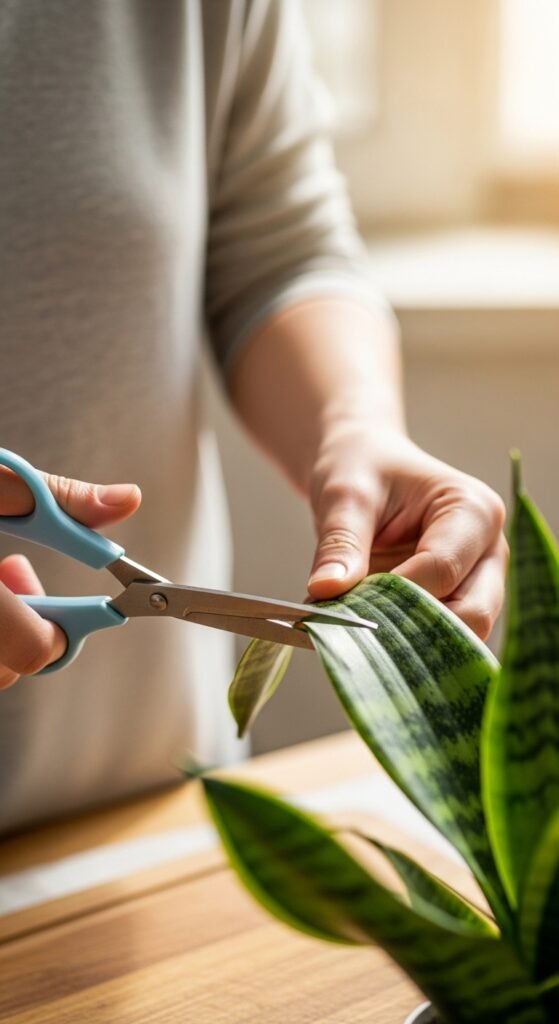
💡 Tip: Use a clean, sharp knife or scissors to avoid crushing the leaf tissue. You can even let the cuttings dry for 24 hours to reduce risk of rot before placing them in water.
💧 Water Propagation Process
Step-by-Step:
- Prepare the Container: Use a small glass or jar with clean, room-temperature water. Avoid tap water with chlorine; filtered or dechlorinated water works best.
- Insert Leaf Cuttings: Place the bottom end of the leaf cutting into the water. Only the base should touch water—avoid submerging the whole leaf.
- Placement: Put the container in bright, indirect light. Direct sunlight can scorch the cutting.
- Change Water Regularly: Refresh water every 1–2 weeks to prevent stagnation and bacterial growth.
- Wait for Roots: Expect roots to form in 3–6 weeks. Healthy roots are white or light green and firm.
💡 Pro tip: For best results, propagate multiple cuttings at once. This improves your chances of at least some surviving.
🌱 Transitioning to Soil
Once your cutting develops roots about 2–3 inches long, it’s ready to move into soil:
- Choose a Well-Draining Pot: A terracotta or ceramic pot with drainage holes is ideal.
- Soil Mix: Use cactus or succulent soil, or mix regular potting soil with perlite/sand for aeration.
- Plant Carefully: Place the rooted cutting gently in soil and lightly water. Avoid overwatering for the first few weeks while the plant acclimates.
- Continue Care: Position the new plant in bright, indirect light and follow the standard care routine outlined in Snake Plant Care Tips.
🌿 Common Mistakes to Avoid
- Submerging the entire leaf: Only the base should touch water; too much water leads to rot.
- Neglecting water changes: Stagnant water can cause bacterial growth and leaf decay.
- Rushing to soil: Wait until roots are fully developed (2–3 inches) before planting.
- Poor light: Roots need bright, indirect light; low light slows development.
✨ Tips for Success
- Clean Tools: Always use sterilized scissors or knives to prevent infection.
- Monitor Roots: Healthy roots are firm and light-colored; brown or mushy roots indicate problems.
- Patience Pays Off: Some cuttings take longer to root; avoid overhandling them.
Propagating in water is a rewarding process, letting you see the plant grow from a single leaf into a flourishing new Sansevieria.
🌸 Final Thoughts
Water propagation is one of the most enjoyable ways to expand your snake plant collection. By following these steps, you’ll create healthy rooted cuttings ready for soil and a long life as a stylish indoor plant.
Remember, caring for your propagated snake plant after transitioning to soil is just as important—regular watering, proper lighting, and fertilizing ensure it thrives. For full care guidance, refer to Snake Plant Care Tips: The Complete Guide to a Healthy, Thriving Sansevieria.