
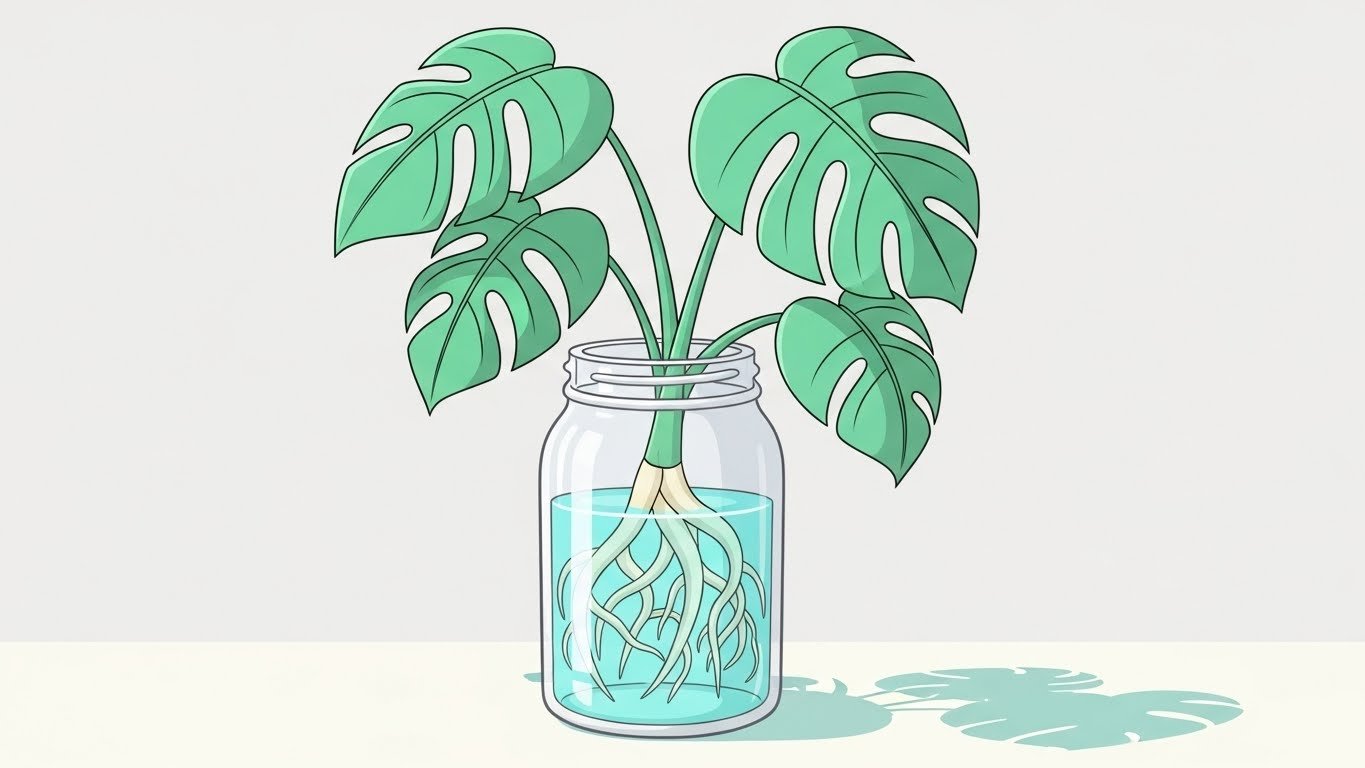
Monstera plant propagation in water is one of the easiest and most rewarding ways to grow new plants from a healthy Monstera. It’s simple, low-cost, and perfect for beginners who want visible results fast. Watching roots grow in water also helps build confidence before transferring the plant to soil.
This guide is based on real indoor plant-growing experience and walks through how to propagate Monstera in water safely, what mistakes to avoid, and how to transition cuttings successfully.
Why Choose Monstera Water Propagation?
Many plant lovers prefer water propagation because:
- Roots are visible and easy to monitor
- Lower risk of early root rot
- No soil mess
- Higher success rate for beginners
For indoor growers, monstera plant propagation in water offers full control over moisture and cleanliness—especially useful in apartments or small homes.
What You Need Before Propagating
Keep it simple. Successful propagation doesn’t require fancy tools.
Essentials:
- Healthy Monstera plant
- Clean, sharp scissors or pruning shears
- Glass jar or container
- Clean, room-temperature water
Optional but helpful:
- Clear container (for monitoring roots)
- Small support stick for stability
Step-by-Step: How to Propagate Monstera in Water
Step 1: Choose the Right Stem Cutting
Look for a healthy stem with:
- At least one node (this is where roots grow)
- One or two healthy leaves
- Optional aerial root (helps speed up rooting)
Important: A leaf alone will not grow roots. The node is essential.
Step 2: Make a Clean Cut
Cut ½–1 inch below the node using sterilized scissors. Clean cuts heal faster and reduce infection risk.
From experience, angled cuts improve water exposure and reduce stem rot.
Step 3: Place the Cutting in Water
Submerge only the node and aerial root in water. Leaves should stay above water to prevent rotting.
Use:
- Filtered water if possible
- Room-temperature water
Place the container in bright, indirect light—never direct sunlight.
Step 4: Change Water Regularly
Change the water every 3–5 days.
This:
- Prevents bacteria growth
- Keeps oxygen levels high
- Encourages healthy root development
Cloudy water is a sign it needs changing immediately.
Step 5: Watch Roots Grow
Roots usually appear within 7–14 days.
Healthy roots look:
- White or light cream
- Firm, not mushy
Let roots grow to 2–3 inches long before transferring to soil.
How Long Can Monstera Stay in Water?
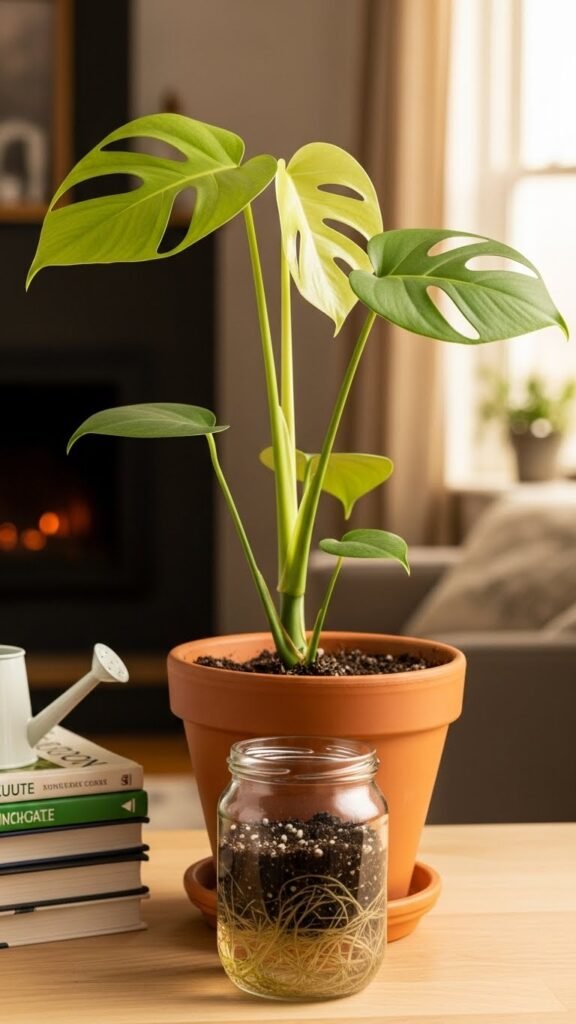
Monstera can survive in water for several weeks or even months, but water-grown roots are different from soil roots.
For long-term health, it’s best to:
- Transfer to soil after strong roots form
- Or switch to a semi-hydro setup intentionally
Keeping cuttings in water too long may slow growth once planted.
Transferring Water-Propagated Monstera to Soil
This step is where many beginners struggle—but it’s easy with the right approach.
Best Soil Mix
Use a light, airy mix:
- Potting soil
- Perlite
- Orchid bark or coco chips
This prevents shock and root rot.
How to Plant
- Fill pot halfway with soil
- Place cutting gently
- Cover roots fully (node just below soil)
- Water lightly
Keep soil slightly moist for the first 1–2 weeks.
Common Mistakes to Avoid
- ❌ No node on cutting
- ❌ Submerging leaves in water
- ❌ Direct sunlight exposure
- ❌ Not changing water
- ❌ Transferring to soil too early
Avoiding these mistakes dramatically increases success rate.
Monstera Propagation in Water: FAQs
Can you propagate Monstera without aerial roots?
Yes. Aerial roots help but are not required as long as a node is present.
Why is my cutting turning yellow?
Usually caused by poor water quality or low light. Change water and move to brighter indirect light.
Can Monstera grow permanently in water?
Yes, but growth is slower and nutrients must be added. Soil growth is healthier long-term.
Final Thoughts
Monstera plant propagation in water is one of the easiest ways to multiply your plant collection. With a healthy cutting, clean water, and patience, success is almost guaranteed.
It’s a perfect method for beginners and a satisfying process even for experienced plant lovers. Once you see those roots forming, it becomes hard not to propagate more.