
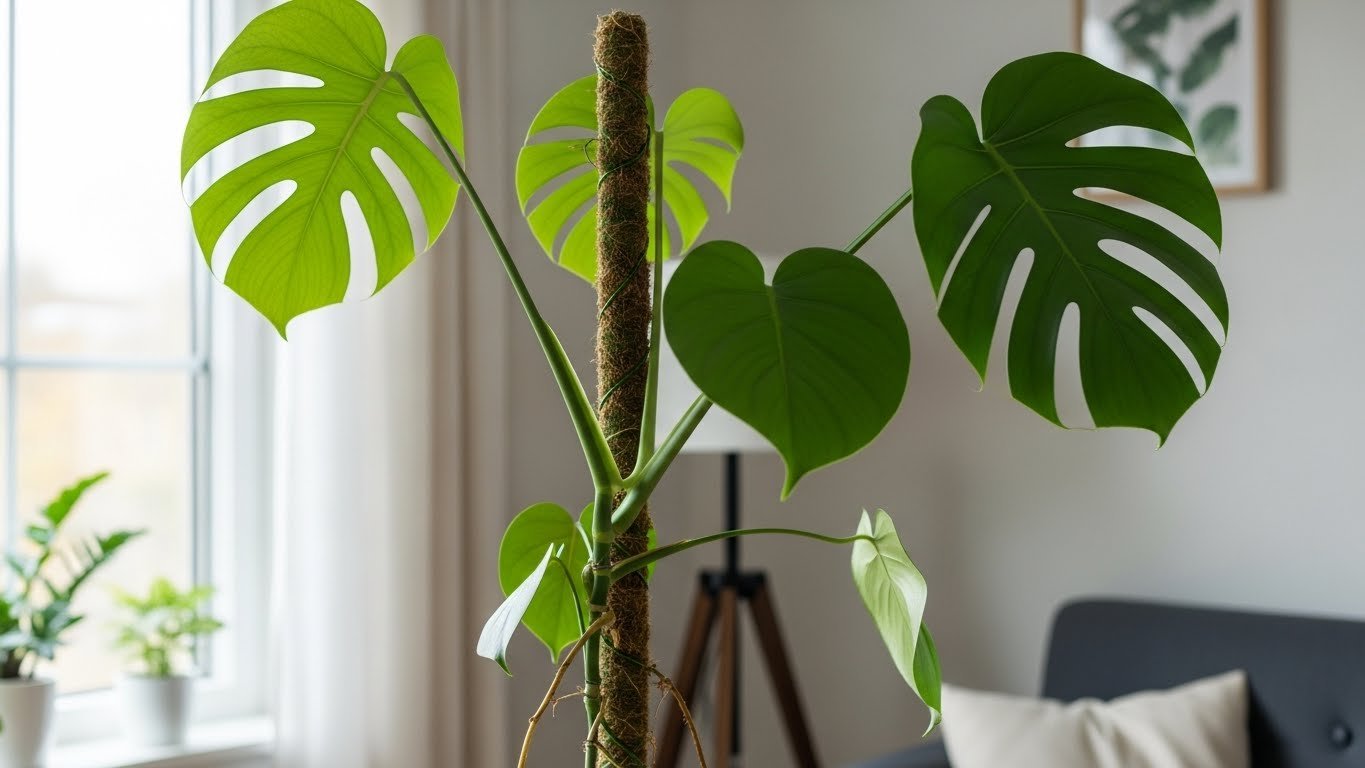
When I first noticed thick, rope-like roots growing out of my Monstera’s stem, I honestly thought something was wrong. I searched everywhere, cut a few out of panic, and later realized I had misunderstood one of the most important parts of monstera plant care aerial roots.
After years of growing Monsteras indoors, I’ve learned that aerial roots are not a problem to fix they’re something to care for correctly. In this guide, I’ll walk you through exactly how I care for Monstera aerial roots, what to do with them, and how they affect the overall health of the plant.
What Are Aerial Roots on a Monstera?
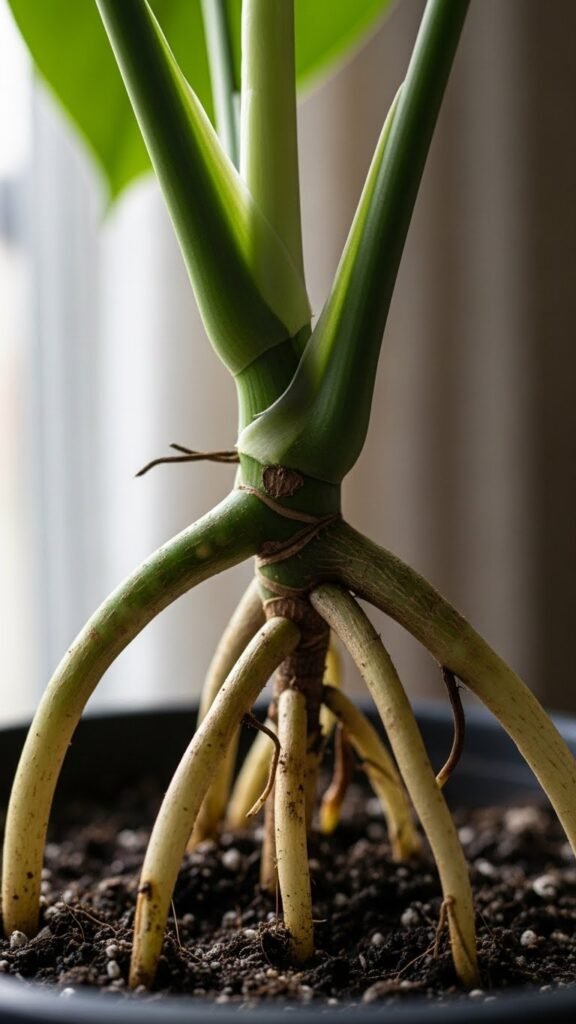
Aerial roots are roots that grow above the soil from the stem or nodes of the plant. In the wild, Monsteras use them to climb trees, anchor themselves, and absorb moisture from the air.
Once I understood this natural behavior, caring for them became much easier.
Why Proper Aerial Root Care Matters
Ignoring aerial roots won’t kill your Monstera, but caring for them properly helps the plant:
- Stay upright and stable
- Support larger, heavier leaves
- Grow taller instead of sprawling
- Look healthier and more mature
That’s why aerial root care is part of overall Monstera care, not something separate.
Step-by-Step Monstera Plant Care for Aerial Roots
Step 1: Observe the Aerial Roots (Don’t React Immediately)
When aerial roots appear, I always observe them first.
Healthy aerial roots are:
- Firm and thick
- Light brown or green
- Flexible when young
If they look healthy, I leave them alone initially. Panic cutting is the biggest mistake I made early on.
Step 2: Decide Whether to Guide or Leave Them
Not all aerial roots need action.
I follow this simple rule:
- Short roots → leave them alone
- Long, searching roots → guide them
This keeps the plant balanced and reduces stem stress.
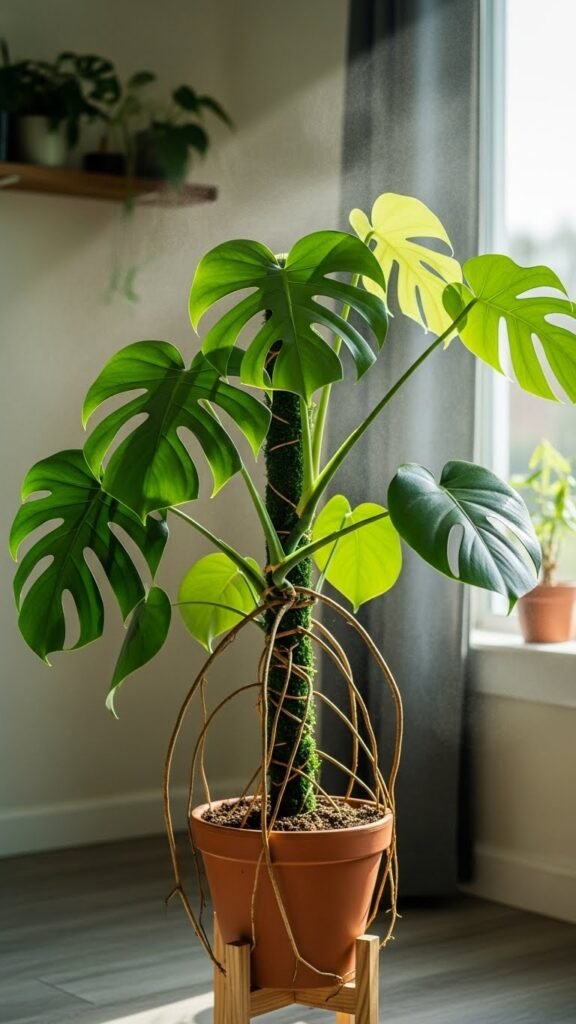
Step 3: Guide Aerial Roots Into the Soil (My Preferred Method)
Whenever possible, I gently guide aerial roots into the potting soil.
How I do it:
- I soften the root slightly with misting
- I bend it slowly toward the soil
- I press it lightly into the top layer
This helps the plant absorb extra moisture and improves stability.
Step 4: Provide Vertical Support Early
One reason aerial roots grow aggressively is lack of support.
Once my Monstera started leaning, aerial roots multiplied fast. Adding support early helped control growth direction and reduced root chaos.
Good support encourages aerial roots to attach naturally instead of growing randomly.
Step 5: Maintain Proper Humidity
Aerial roots respond strongly to humidity.
From my experience:
- Low humidity = dry, brittle aerial roots
- Moderate humidity = flexible, healthy roots
I don’t overdo it just keeping indoor humidity reasonable makes a noticeable difference.
Step 6: Water the Plant Correctly (Not the Roots)
A common mistake I made was spraying aerial roots heavily.
What works better:
- Water the soil thoroughly
- Lightly mist aerial roots occasionally
- Never soak them constantly
Healthy roots come from healthy soil watering habits.
Step 7: Know When Cutting Is Okay
I only cut aerial roots when:
- They are damaged or broken
- They’re becoming a safety hazard
- They are completely dried out
When I do cut, I always use clean scissors and never remove more than necessary.
How Aerial Roots Affect Overall Monstera Care
Once I started caring for aerial roots properly, I noticed:
- Leaves grew larger and stronger
- The plant climbed instead of spreading
- Stems stopped bending under weight
Aerial roots act like natural support systems, and caring for them improves the whole plant.
Indoor vs Outdoor Aerial Root Care
Indoor Monstera
- Roots grow slower
- Need guided support
- Less humidity available
Outdoor Monstera
- Roots grow faster
- Attach naturally
- Higher moisture levels
Indoors, guidance matters more because the plant doesn’t have trees to climb.
Common Aerial Root Care Mistakes I Avoid Now
After trial and error, here’s what I never do anymore:
- Cut all aerial roots
- Force roots into soil aggressively
- Ignore support needs
- Assume roots mean a problem
Understanding plant behavior changed everything for me.
Are Aerial Roots a Sign of Healthy Growth?
Yes in my experience, aerial roots usually appear when:
- The plant is mature
- Growth conditions are good
- Leaves are getting larger
They’re a sign the Monstera wants to grow up, not that something is wrong.
My Final Care Advice
If there’s one thing I’ve learned, it’s this:
Monstera plant care aerial roots is about guidance, not control.
You don’t need to fight them, hide them, or constantly cut them. With proper support, light, and patience, aerial roots become a helpful part of a strong, beautiful Monstera.