

Fiddle Leaf Figs (Ficus lyrata) have taken the interior design world by storm. Their tall, glossy leaves add elegance and drama to any living space. But for cat owners, these plants can feel like a ticking time bomb. Cats are naturally curious and love to chew on leaves, which raises an important question: Is a fiddle leaf fig toxic to cats?
The answer is yes—but don’t panic. With the right precautions, you can safely enjoy the beauty of this plant without putting your feline friend at risk. This guide will cover everything you need to know, from symptoms of toxicity to practical tips for keeping your cat safe and your plant thriving.
Why Fiddle Leaf Figs Are Mildly Toxic to Cats
Fiddle leaf figs contain a substance called ficin, a sap that can irritate your cat’s mouth, skin, and digestive system. When a cat chews on the leaves or stems, it may experience:
- Drooling or excessive salivation
- Vomiting or nausea
- Oral irritation (red or itchy gums)
- Loss of appetite
While serious complications are rare, ingesting larger amounts of the plant could potentially cause more severe digestive upset. That’s why it’s crucial to supervise your cat and take proactive measures.
How to Tell if Your Cat Has Chewed a Fiddle Leaf Fig
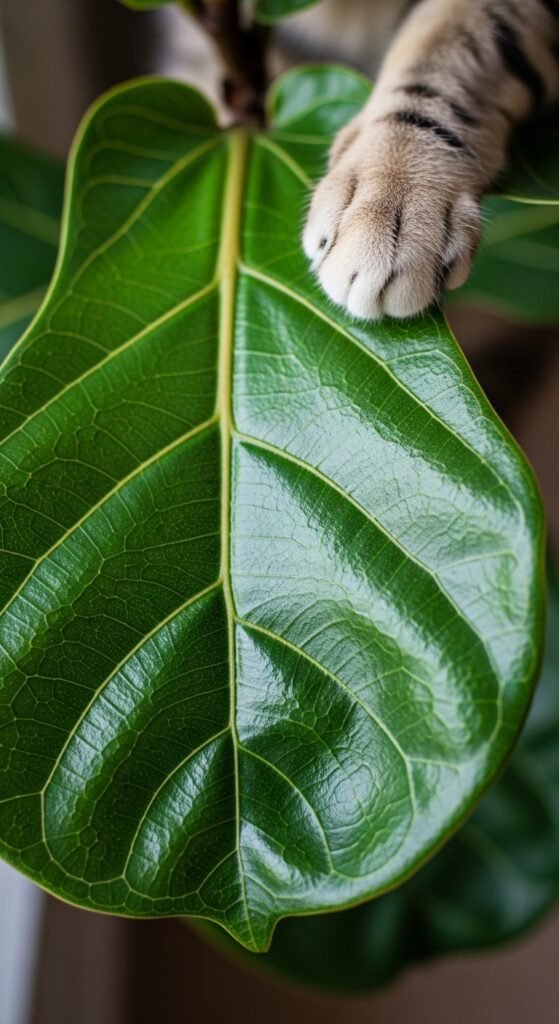
Even if you don’t catch your cat in the act, there are signs to watch for:
- Visible bite marks or torn leaves: Fiddle leaf fig leaves are large and glossy, so any damage is easy to spot.
- Behavioral changes: Cats may paw at their mouth, drool excessively, or avoid food temporarily.
- Vomiting or diarrhea: A sign that your cat ingested something irritating.
If your cat shows persistent vomiting, lethargy, or swelling in the mouth, it’s best to contact your veterinarian immediately.
Practical Tips to Keep Your Cat Safe Around Fiddle Leaf Figs
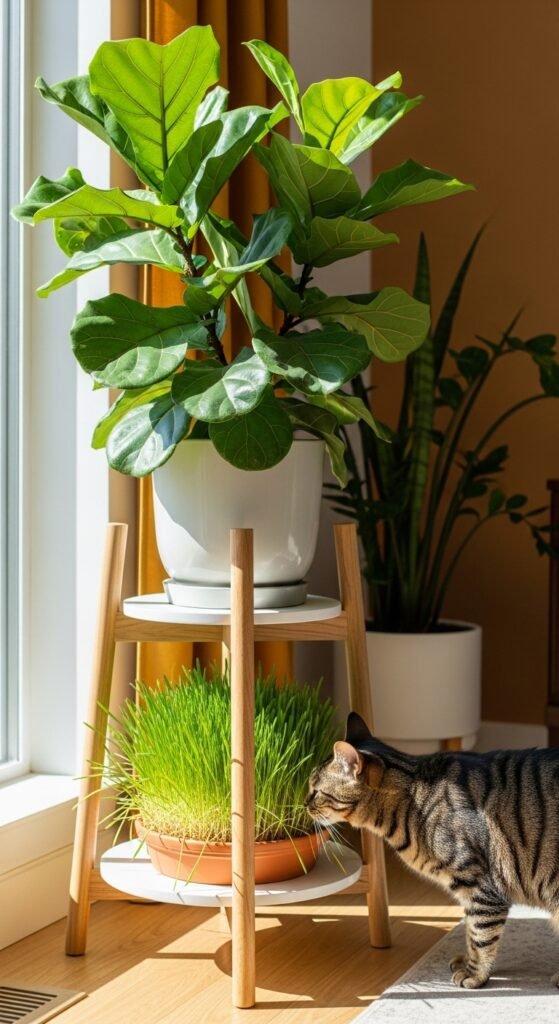
With some planning, you can create a safe environment for both your cat and your plant. Here are actionable strategies that work:
1. Elevate Your Plant
Cats are excellent climbers, but placing your fiddle leaf fig on a tall stand, shelf, or corner can reduce access. Personally, I use a Lechuza Self-Watering Planter on a sturdy plant stand—it keeps the plant safe, ensures proper watering, and adds a modern aesthetic to my living room.
2. Use Cat-Repellent Sprays
Sprays designed to deter cats can be very effective. I’ve tried Biosafe Cat Repellent Spray, and it keeps my cat away without harming the plant. The citrus scent isn’t noticeable to humans but is unappealing to cats.
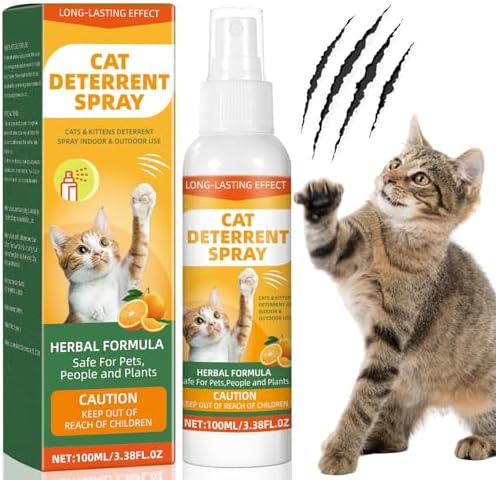
- WHERE TO USE – Cat repellent can leave unpleasant odors for cats. In the room, boundaries are created by spraying in pre…
- EASY TO USE – Shake the spray bottle gently before use, and then spray the spray evenly on the items that the cat often …
- PET EXPERT TRUST – Cat Scratch Spray is a simple and humane solution that can prevent your cat friends from urinating ev…
3. Offer Safe Alternatives
To redirect your cat’s chewing habit, provide safe plants like cat grass or catnip. I grow SmartyKat Catnip Cat Grass Kit near my windowsill. My cat loves it, and she completely ignores my fiddle leaf fig. This has been a total lifesaver for my plant.

- Provides fresh indoor cat grass designed to support your cat’s natural chewing behavior and everyday wellness, offering …
- Naturally high in plant fiber, helping support healthy digestion and the natural elimination of hairballs as part of you…
- Rich in naturally occurring chlorophyll, fiber, and amino acids found in young green grasses, supporting digestive balan…
4. Create a Barrier
If your cat is persistent, consider a decorative cage, plant terrarium, or even a clear acrylic shield around the pot. This is especially helpful for kittens, who are more likely to explore everything with their mouths.
5. Keep the Plant Healthy
A healthy plant is less likely to drop leaves or produce irritating sap. Tips for maintaining a fiddle leaf fig include:
- Bright, indirect sunlight: Place near a window with filtered light.
- Consistent watering: Water only when the top inch of soil feels dry. I love using a long-spout watering can for precision without spilling.
- Regular leaf cleaning: Wipe dust from leaves to maintain their glossy finish.
Fiddle Leaf Fig and Cat Coexistence: Real-Life Tips
From personal experience, it’s entirely possible to have both a fiddle leaf fig and a cat without stress. Here’s what worked in my home:
- I keep my plant on a decorative stand slightly away from the main walking path.
- I provide multiple cat-safe plants around the room to satisfy my cat’s curiosity.
- I monitor the leaves daily for any signs of nibbling.
- Using a safe deterrent spray occasionally reinforces boundaries.
With these precautions, I’ve never had a single incident of my cat chewing the fiddle leaf fig, and the plant continues to thrive.
Other Cat-Safe Indoor Plants to Complement Your Fiddle Leaf Fig
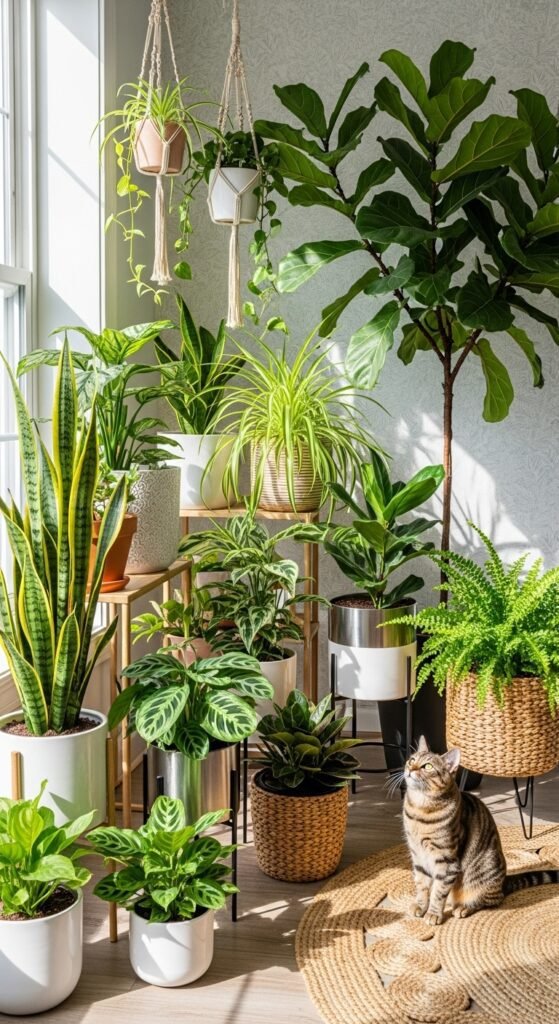
Even if you love fiddle leaf figs, it’s a good idea to have pet-friendly greenery around your home. Some options include:
- Areca Palm – Adds a tropical vibe and is completely safe for cats.
- Parlor Palm – Perfect for low-light areas and non-toxic to cats.
- Spider Plant – Fun, trailing leaves that cats often enjoy nibbling without harm.
You can even mix and match in stylish pots like the Lechuza Self-Watering Planters to create a pet-friendly indoor jungle.

- Discover the perfect way to bring your patio and balcony to life with the Balconera in bright new colors, brackets sold …
- The planter’s water-level indicator shows when the reservoir needs to be refilled
- Made in Germany of durable frost and UV resistant PP plastic for indoor or outdoor use
When to Seek Veterinary Advice
If your cat chews on a fiddle leaf fig and shows any of the following symptoms, contact your vet immediately:
- Persistent vomiting
- Excessive drooling
- Diarrhea
- Lethargy or unusual behavior
- Swelling or redness in the mouth
While the toxicity is usually mild, it’s better to be safe and get professional advice.
Conclusion: Enjoy Your Fiddle Leaf Fig Without Worry
Fiddle leaf figs are mildly toxic to cats, but with proper precautions, they can safely coexist in a home with furry friends. Elevate your plant, provide safe alternatives like cat grass, and monitor your cat’s behavior. Using products like Biosafe Cat Repellent Spray, SmartyKat Cat Grass Kit, and Lechuza Planters can make a huge difference.
With the right setup, your home can be both cat-friendly and stylish, letting you enjoy the beauty and elegance of fiddle leaf figs without compromise.