

Black spots on a Monstera plant can feel scary one week the leaves look perfect, and the next there are dark marks spreading across that beautiful foliage. I’ve helped many plant parents diagnose this exact problem, and the good news is: most causes are fixable once you know what you’re dealing with.
This guide breaks down why Monstera plant black spots appear, how to identify the real cause, and step-by-step solutions to bring your plant back to health.
What Do Black Spots on Monstera Mean?
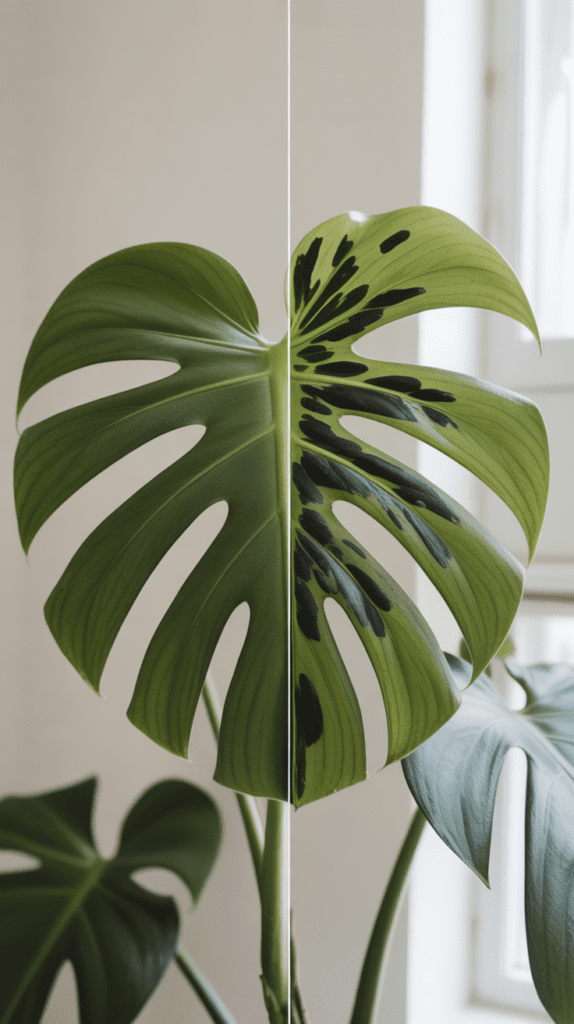
Black spots are not a disease on their own—they’re a symptom. The plant is trying to tell you something is off with:
- Watering
- Roots
- Temperature
- Fungal or bacterial infection
- Physical damage
The key is to look at the type of spot and what’s happening around it.
1. Overwatering & Root Rot (Most Common Cause)
If the black areas look soft, mushy, or wet, the issue is almost always too much water.
Signs
- Black spots start at leaf edges
- Soil stays wet for days
- Leaves turn yellow + black together
- Musty smell from soil
How to Fix
- Stop watering immediately
- Check roots for brown, mushy sections
- Remove damaged roots
- Repot in fresh, well-draining soil
- Water only when top 2 inches are dry
Monsteras prefer to dry slightly between waterings. Constantly wet soil suffocates the roots, leading to black patches on leaves.
2. Fungal Leaf Infection
Sometimes black spots appear with a yellow halo around them. That usually points to fungus.
Signs
- Circular black or dark brown dots
- Spots slowly spread
- Often happens after leaves stay wet
- Poor air circulation
How to Fix
- Remove infected leaves
- Avoid misting for a while
- Improve airflow around the plant
- Water the soil, not the leaves
- Keep leaves dry
3. Cold Damage or Draft Shock
Monsteras hate sudden temperature drops.
Signs
- Random black patches after a cold night
- Plant near AC or open window
- Spots appear suddenly
How to Fix
- Move plant away from cold drafts
- Keep temperature 18–29°C (65–85°F)
- Avoid placing near AC vents or heaters
Cold damage can’t be reversed, but new leaves will grow healthy once conditions improve.
4. Sunburn That Turns Black
Too much direct sun can first cause brown burns that later darken to black.
Signs
- Spots on side facing window
- Crispy texture
- Happens after moving to brighter light
How to Fix
- Shift to bright indirect light
- Avoid harsh afternoon sun
- Don’t move suddenly from low to high light
5. Bacterial Leaf Spot
This is less common but more serious.
Signs
- Irregular black marks
- Wet, oily look
- Fast spreading
How to Fix
- Isolate the plant
- Remove affected leaves
- Avoid overhead watering
- Disinfect scissors after each cut
6. Physical Damage
Pets, bending, or transport can bruise leaves and turn black later.
Signs
- Spots appear exactly where leaf was bent
- No spreading
- Plant otherwise healthy
Fix
- Nothing needed—just cosmetic
- Trim if it bothers you
7. Fertilizer Burn
Too much fertilizer can damage roots and show as black leaf tips.
Signs
- Black edges + crispy tips
- White crust on soil
- Recently fertilized
Fix
- Flush soil with clean water
- Pause fertilizing for a month
- Resume lightly
Step-by-Step Diagnosis Checklist
Ask yourself:
- Is the soil staying wet? → think overwatering
- Are leaves getting wet often? → possible fungus
- Was there a cold draft? → temperature shock
- Did lighting recently change? → sunburn
- Recently fertilized? → fertilizer burn
Answering these will reveal 90% of cases.
Should You Cut Off Black Leaves?
Yes—when:
- The spot is spreading
- Leaf is mostly damaged
- Infection suspected
Use clean scissors and cut near the base of the leaf stem.
How to Prevent Monstera Black Spots
- Water only when soil partly dries
- Use pots with drainage
- Keep good airflow
- Avoid misting at night
- Stable indoor temperatures
- Don’t overfeed fertilizer
Final Thoughts
Monstera plant black spots look alarming, but they’re usually a care signal, not a death sentence. With the right adjustments—especially watering and environment—most Monsteras bounce back with healthy new leaves.
If your plant has only a few marks, don’t panic. Focus on correcting the root cause and give it time to recover.