
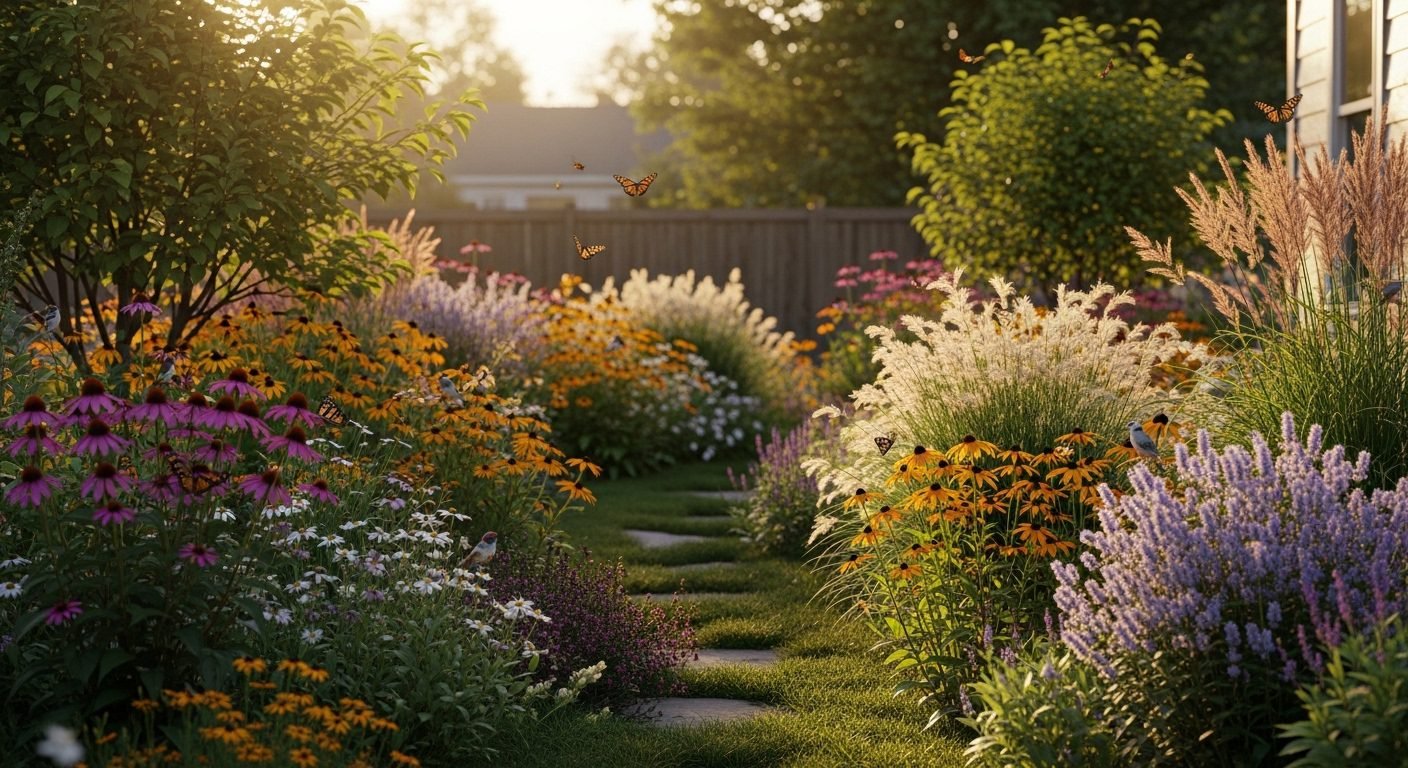
Over the years, I’ve slowly replaced high-maintenance plants in my yard with native shrubs and it’s been one of the smartest gardening decisions I’ve ever made. They need less water, fewer fertilizers, and far less babysitting. Even better? Birds, butterflies, and bees showed up almost immediately.
If you want a garden that looks beautiful and works with nature instead of against it, here are 10 native shrub garden ideas that truly make a difference.
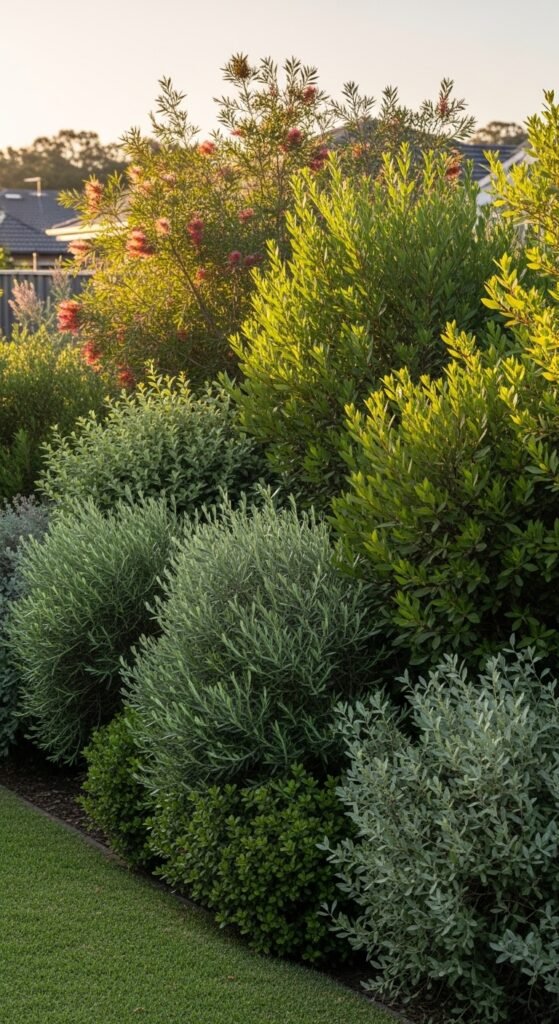
1. Create a Layered Native Privacy Hedge
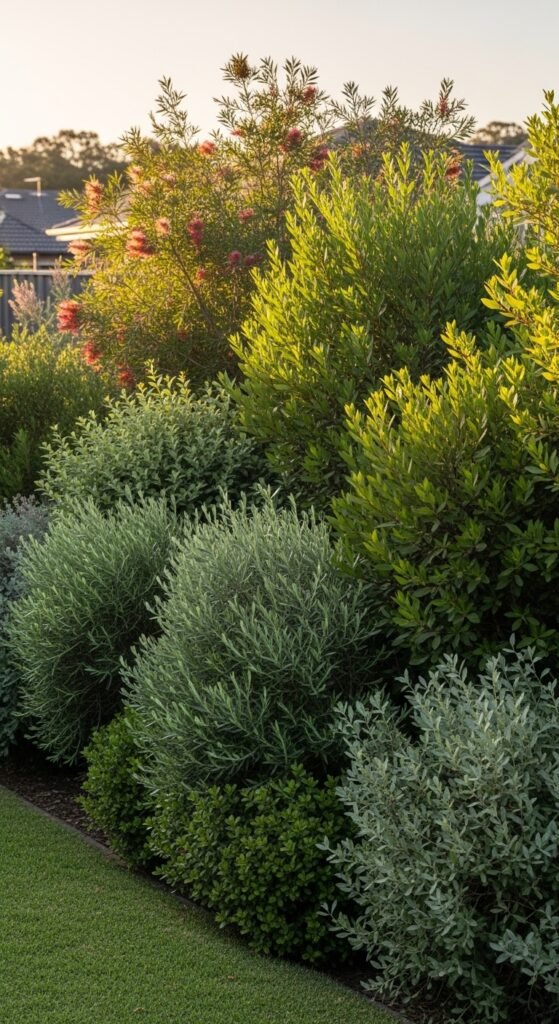
Instead of installing a fence, I planted a mixed hedge using different native shrubs. Some grow tall, others stay mid-sized, and a few spread outward.
The layered look feels softer than a solid wall, and it blocks wind while giving birds safe nesting spots. Over time, it becomes a living, breathing border.
Tip: Mix evergreen and deciduous shrubs for year-round interest.
2. Design a Pollinator-Focused Shrub Border
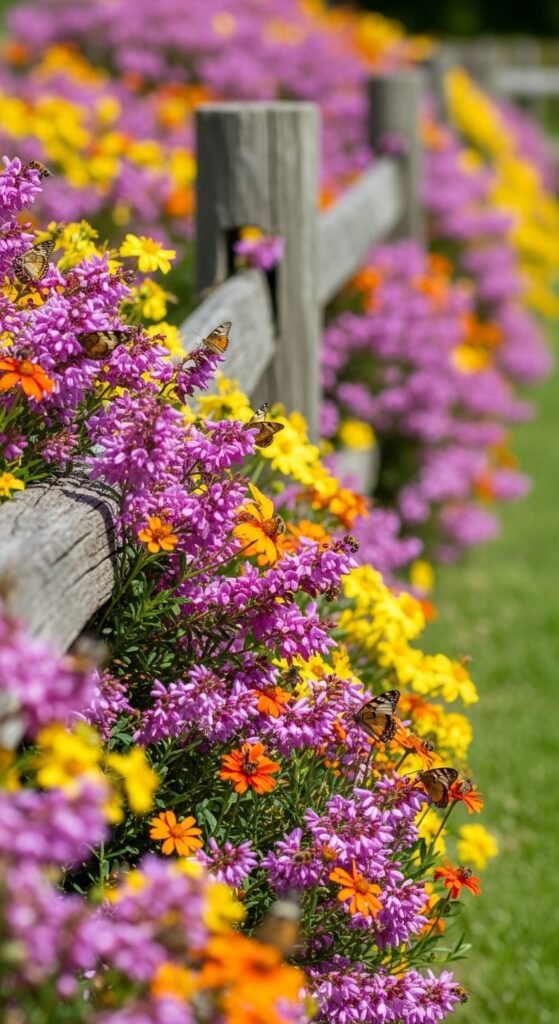
When I added flowering native shrubs along the edge of my lawn, pollinators followed quickly. Early bloomers feed bees in spring, while late bloomers support them into fall.
This type of border works beautifully along fences, driveways, or property lines. It also reduces mowing space, which I absolutely appreciate.
3. Build a Wildlife Corner With Berry-Producing Shrubs
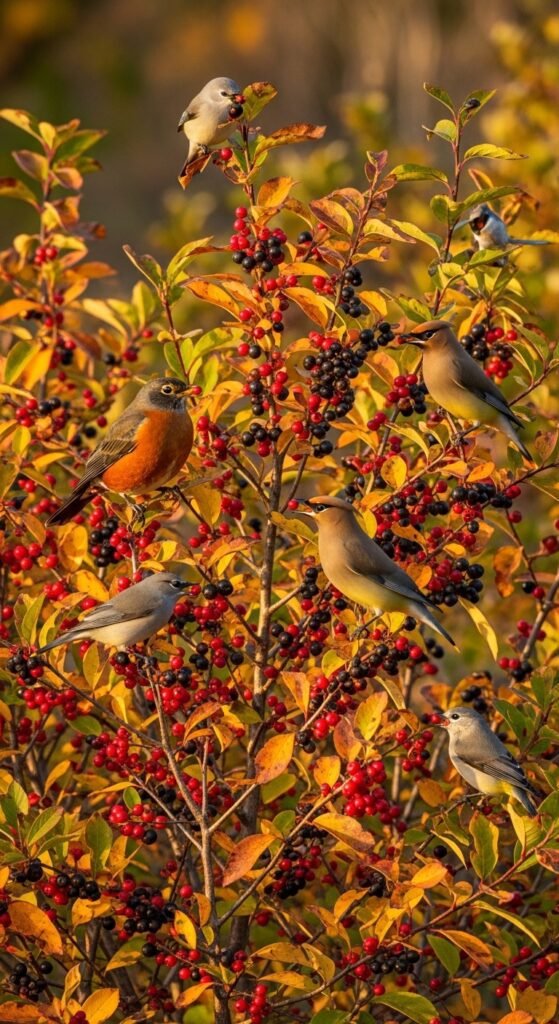
One corner of my garden is dedicated entirely to birds. Native berry shrubs provide food long after flowers fade.
I’ve noticed cardinals and sparrows returning year after year. It’s surprisingly rewarding to know your garden supports real ecosystems.
4. Replace Lawn With a Native Shrub Island Bed
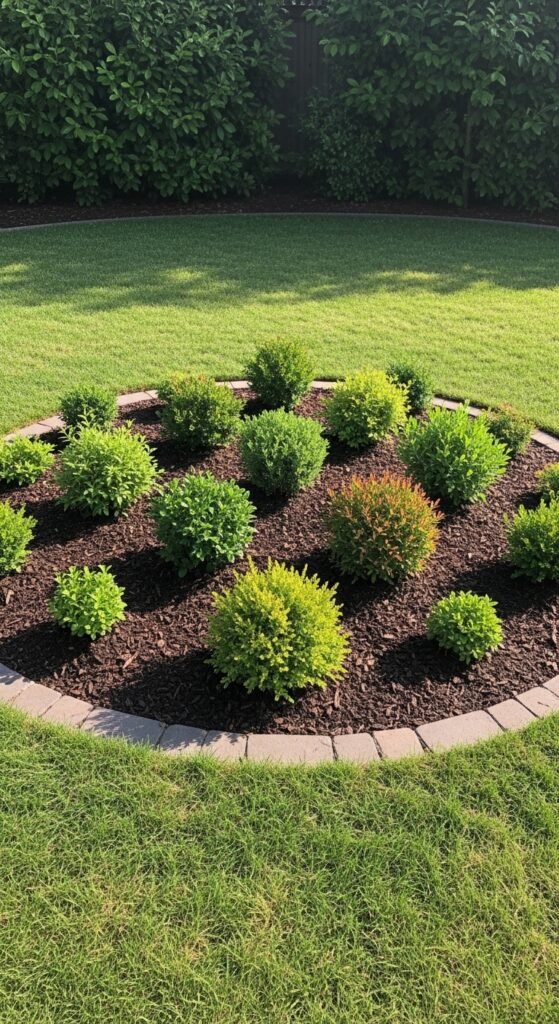
Lawns demand constant watering and mowing. I removed a circular section and planted a mix of drought-tolerant native shrubs instead.
Now that spot has texture, color, and seasonal blooms—with far less work. Adding mulch around shrubs keeps weeds down and soil moisture stable.
5. Create a Native Foundation Planting
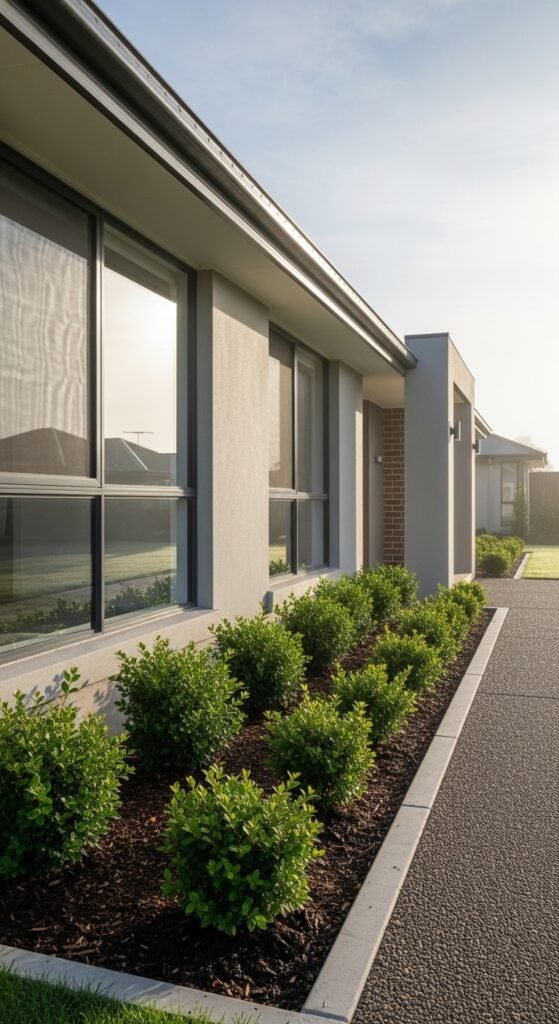
If the area around your house looks plain, native shrubs can completely transform it. I chose compact varieties that don’t block windows but still add structure.
The best part is they’re already adapted to local weather, so they handle heat waves and cold snaps better than exotic ornamentals.
6. Design a Four-Season Shrub Garden
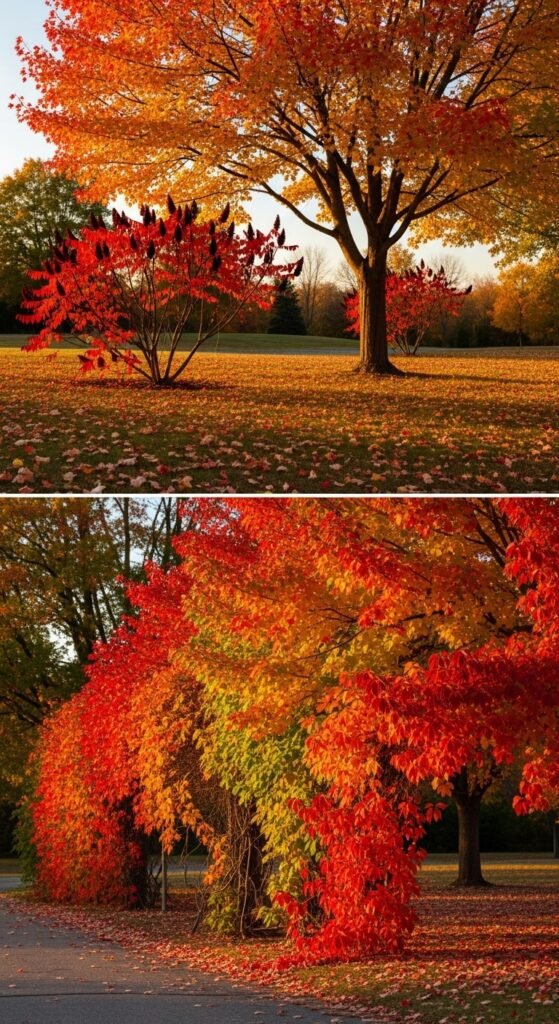
One lesson I learned: don’t just plan for spring. Choose shrubs that offer something in every season:
- Spring flowers
- Summer greenery
- Fall color
- Winter berries or textured branches
My winter garden used to look empty. Now it still feels alive, even in January.
7. Use Native Shrubs for Natural Wind Protection
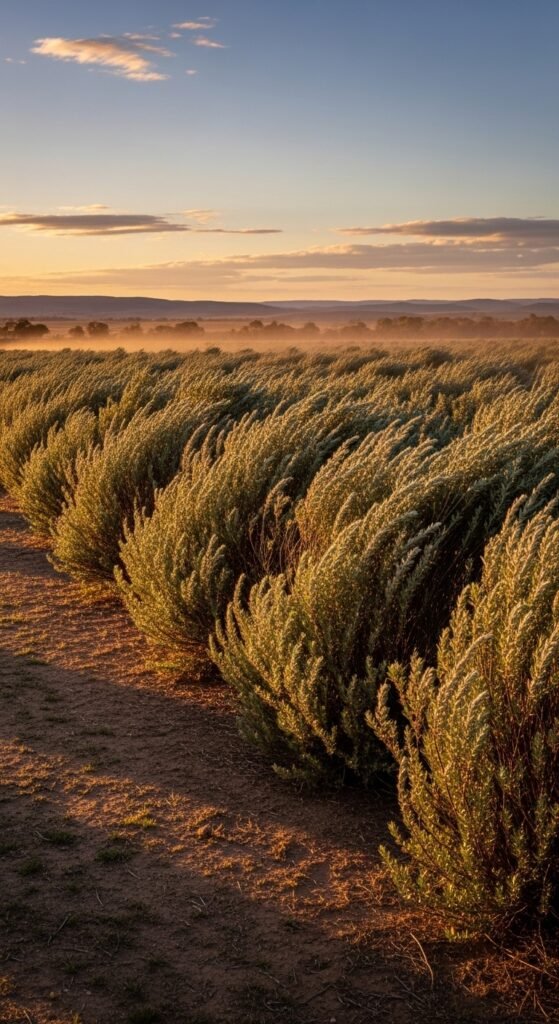
If your yard gets strong wind, a row of dense native shrubs works better than a solid fence. They filter wind rather than deflect it harshly.
Since adding mine, I’ve noticed less soil drying and fewer broken stems in surrounding plants.
8. Add a Shrub Pathway for a Woodland Feel
I once walked through a botanical garden that had shrubs lining both sides of a narrow path—it felt magical. I recreated a smaller version at home using shade-tolerant native shrubs.
It instantly made my backyard feel more private and immersive.
9. Combine Native Shrubs With Native Grasses
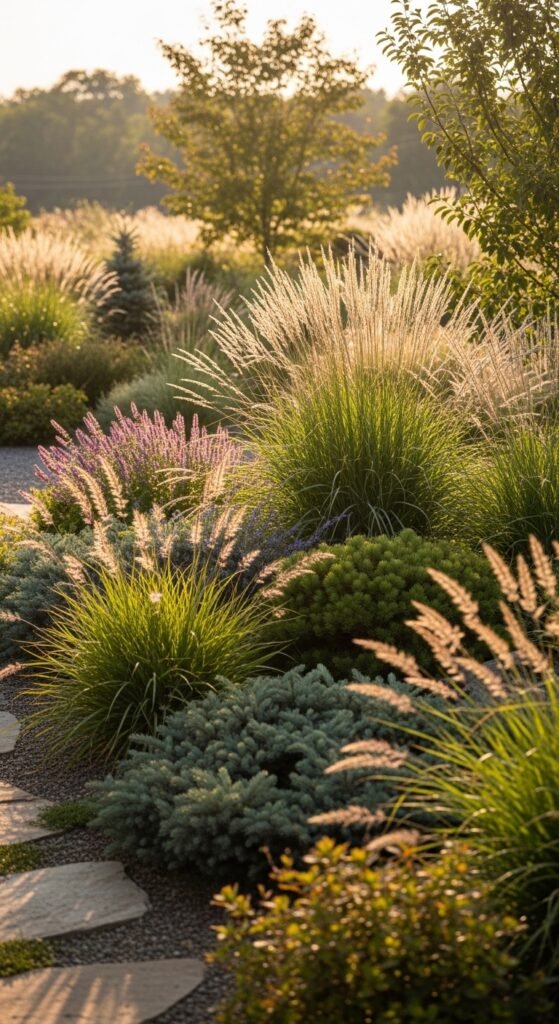
One of my favorite combinations is shrubs mixed with ornamental native grasses. The grasses add movement, while shrubs provide structure.
This pairing looks especially beautiful in modern or naturalistic landscapes. It also requires very little watering once established.
10. Create a Rain-Friendly Shrub Garden
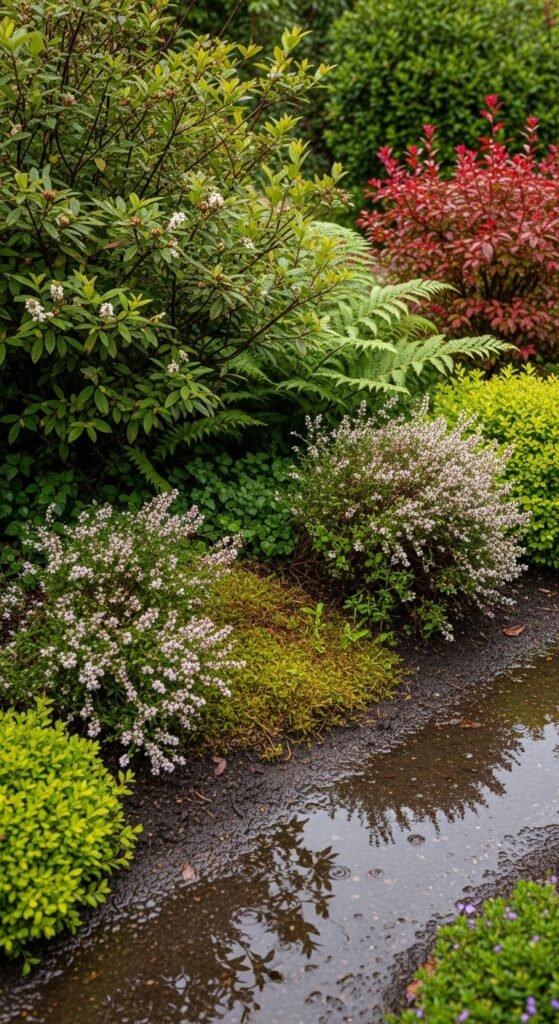
If you have a low spot in your yard where water collects, plant native shrubs that tolerate wet soil. Instead of fighting drainage problems, you work with them.
This approach not only solves an issue but turns it into a feature. My once-muddy patch now looks intentional and lush.
Why Native Shrubs Changed My Garden
Switching to native shrubs simplified everything:
- Less watering
- Fewer pest problems
- Better survival rates
- More wildlife activity
They don’t just decorate the garden—they support it.
If you’re planning to redesign your outdoor space, start small. Replace one section at a time and observe how your yard responds. Over a couple of seasons, you’ll likely notice what I did: healthier soil, more birds, and a garden that practically takes care of itself.