
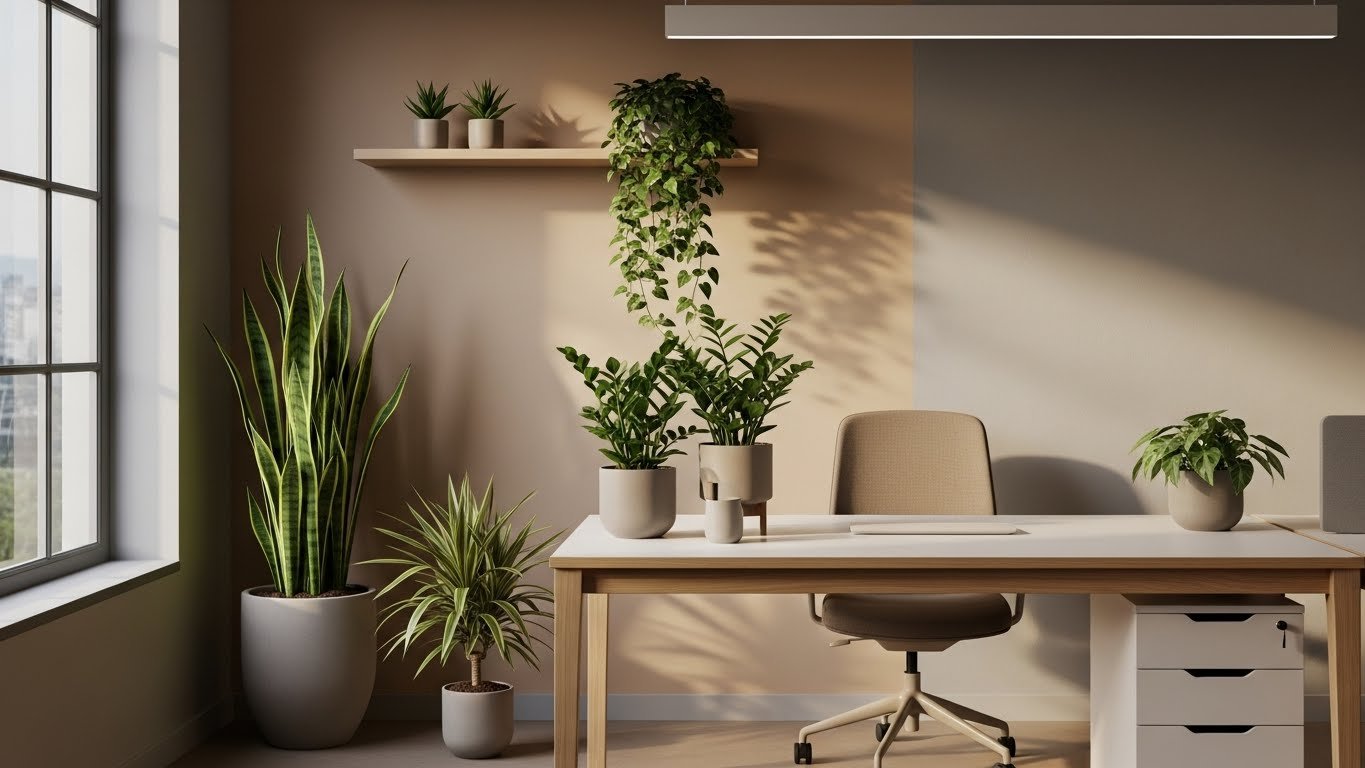
Creating a calm and productive office doesn’t require bright windows or constant plant care. Many indoor plants actually prefer low light and can thrive in office environments with artificial lighting. After years of testing different plants in real office settings home offices, shared workspaces, and window-poor rooms these seven plants consistently proved to be the most reliable, stress-free options.
They are easy to maintain, visually appealing, and known for their ability to survive long workweeks with minimal attention.
1. Snake Plant (Sansevieria)
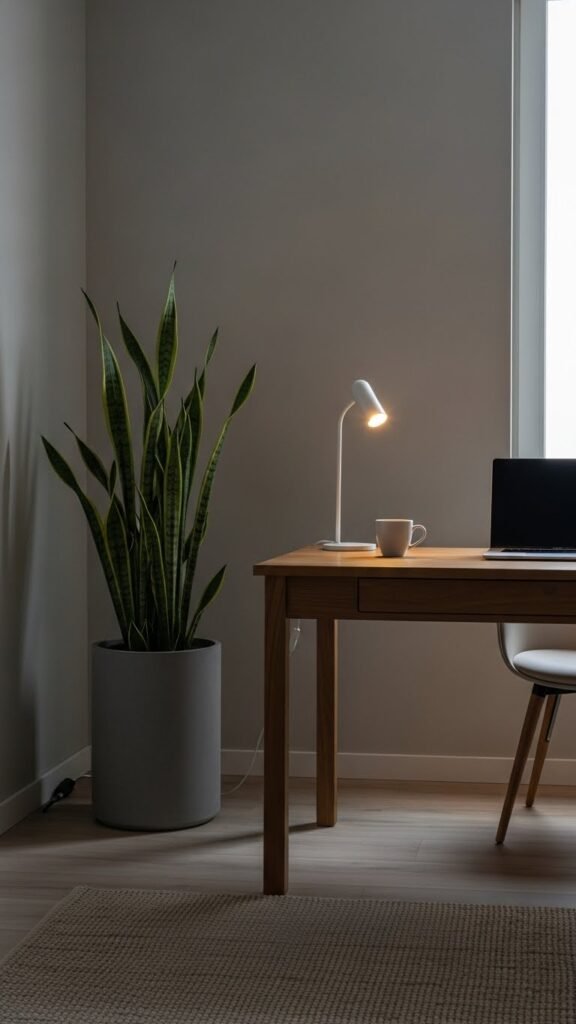
The snake plant is often considered the ultimate hard-to-kill office plant. It tolerates low light extremely well and doesn’t mind irregular watering.
In real office use, this plant has been left untouched for weeks and still looked upright and healthy. Its tall, structured leaves make it perfect for corners or next to desks where floor space matters.
Why it works in offices:
- Thrives in low light
- Very low watering needs
- Adds a clean, modern look
2. ZZ Plant (Zamioculcas zamiifolia)
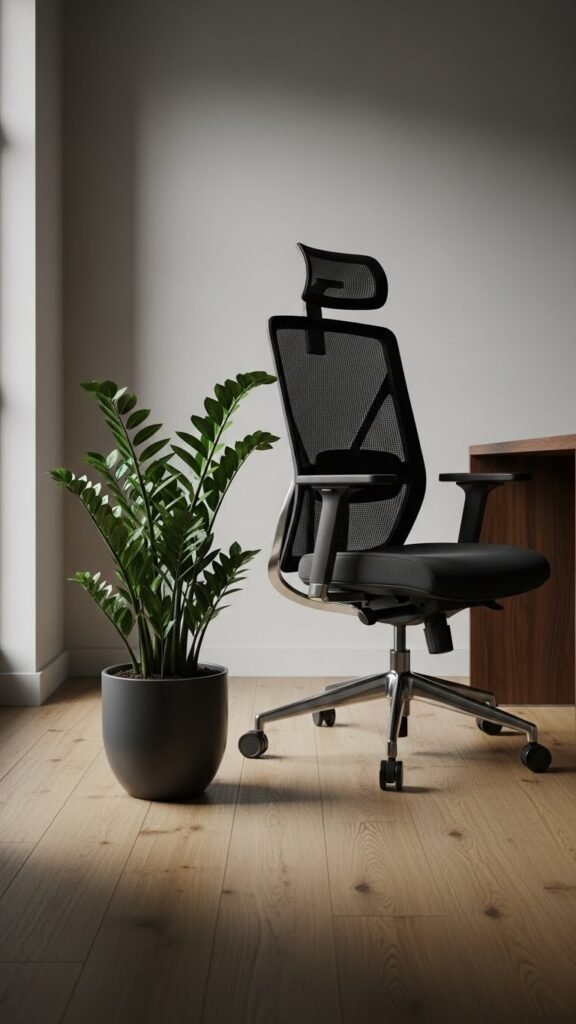
The ZZ plant is a favorite for offices with poor lighting. It has glossy leaves that reflect light beautifully, making the space feel brighter without extra effort.
This plant has proven especially reliable in offices where lights stay on for long hours but sunlight is minimal. It continues to grow slowly and evenly with almost no maintenance.
Why it works in offices:
- Excellent low-light tolerance
- Hardy and drought-resistant
- Looks polished and professional
3. Pothos (Devil’s Ivy)
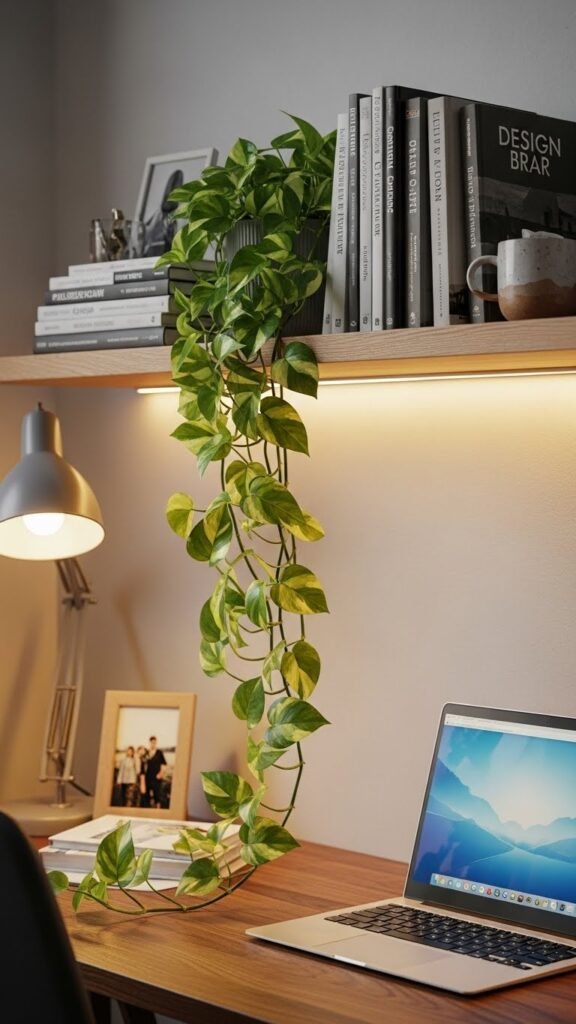
Pothos is one of the easiest indoor plants to grow and adapts well to office environments. It works equally well in small pots, hanging planters, or shelves.
In real workspace testing, pothos stayed healthy even under fluorescent lights and occasional missed watering. Its trailing vines soften rigid office layouts and bring a relaxed feel.
Why it works in offices:
- Grows well in low light
- Easy to shape and trim
- Ideal for shelves and hanging pots
4. Peace Lily (Spathiphyllum)
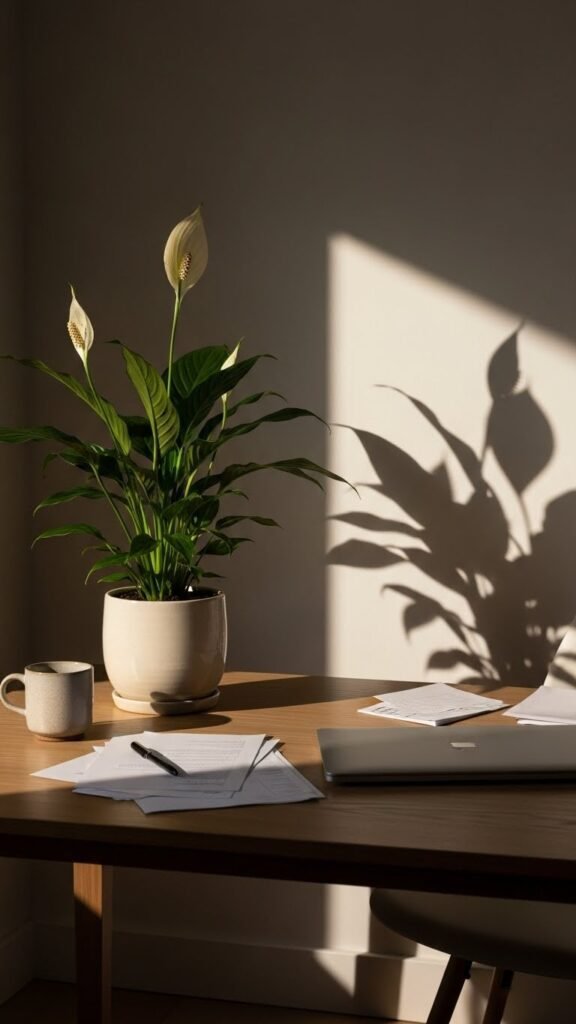
For offices that need a softer, more calming plant, the peace lily is an excellent choice. It tolerates low to medium light and communicates clearly when it needs water by gently drooping.
This plant has been especially effective in reducing the sterile feel of office spaces and adds a touch of elegance without being demanding.
Why it works in offices:
- Adapts to low light
- Visually calming
- Great for desks and side tables
5. Cast Iron Plant (Aspidistra elatior)
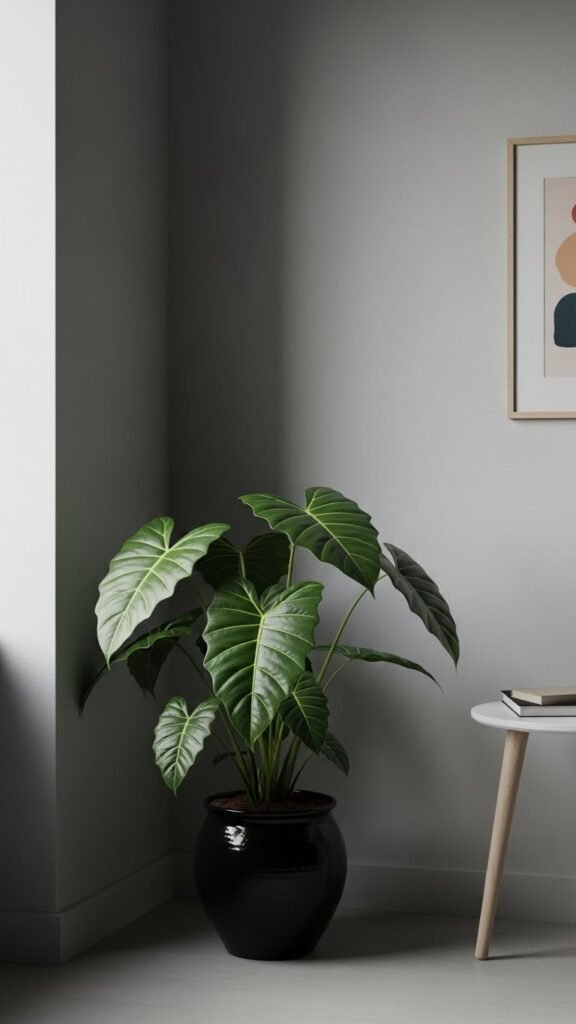
True to its name, the cast iron plant is extremely tough. It handles low light, temperature changes, and neglect better than most indoor plants.
In office testing, this plant remained steady and attractive in areas where other plants failed. It’s ideal for busy professionals who want greenery without responsibility.
Why it works in offices:
- Extremely hardy
- Thrives in low light
- Perfect for low-maintenance setups
6. Chinese Evergreen (Aglaonema)
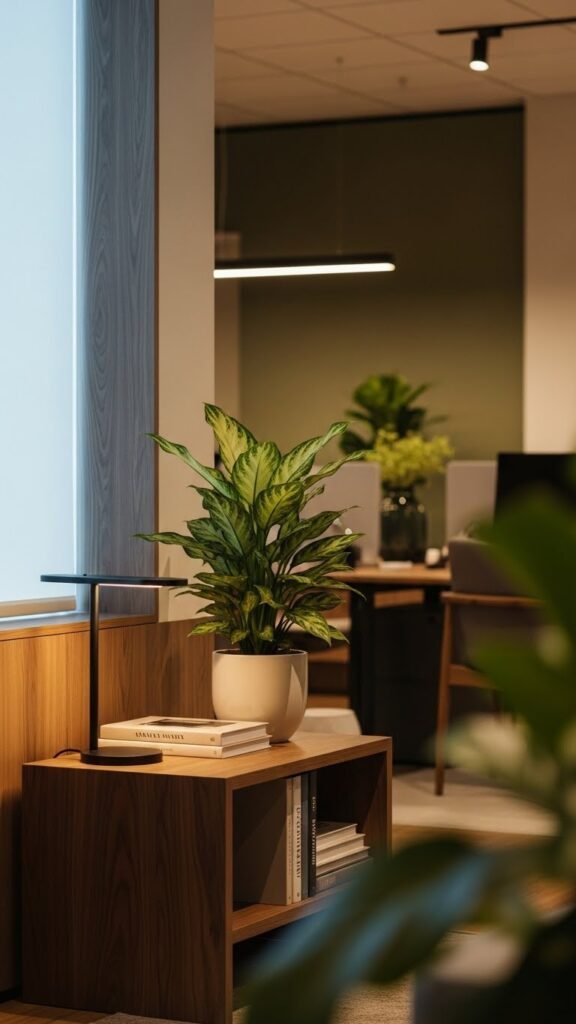
Chinese evergreen plants are well-known for their adaptability and decorative foliage. They perform well in low light and add subtle color to neutral office interiors.
These plants have shown consistent growth in office environments with minimal care, making them a long-term, reliable choice.
Why it works in offices:
- Handles low light well
- Attractive leaf patterns
- Ideal for desks and floor pots
7. Dracaena
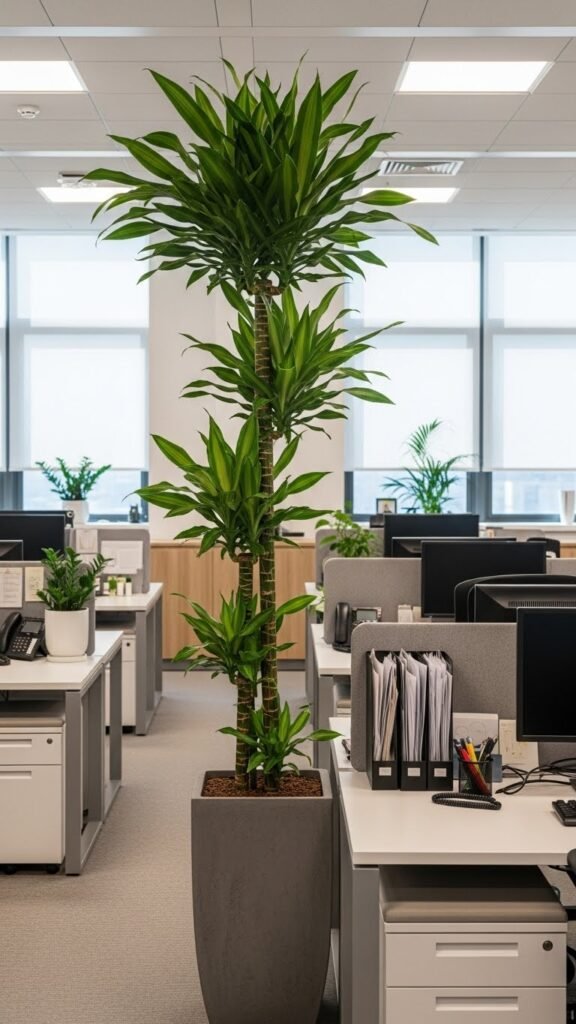
Dracaena varieties are popular office plants because of their upright growth and ability to tolerate low light conditions.
From personal workspace experience, dracaena holds its shape well and adds height without overwhelming the room. It’s especially effective in medium to large offices.
Why it works in offices:
- Grows well in indirect light
- Helps structure office decor
- Low watering needs
Thoughts
Low light doesn’t have to mean lifeless. With the right plants, an office can feel calmer, more inviting, and visually balanced. These seven low light indoor plants for office use have been tested in real work environments and consistently performed well with minimal care.
Choosing hardy, adaptable plants not only saves time but also creates a healthier, more pleasant workspace that supports focus and relaxation.