
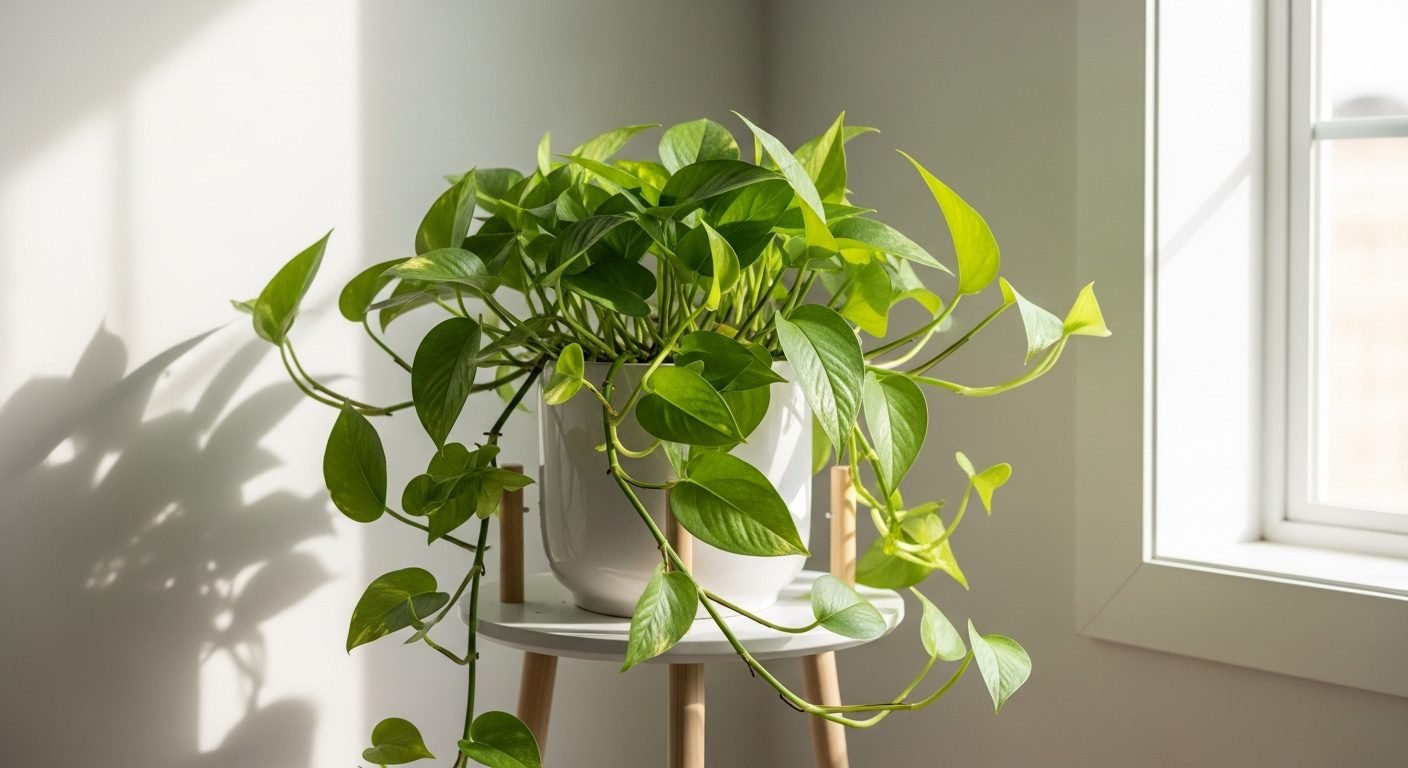
A pothos plant is known for being hardy, but even this “easy” houseplant can start to struggle. Yellow leaves, drooping vines, slow growth, or root rot are all signs something is wrong. The good news? In most cases, a dying pothos can be saved with the right care and a little patience.
Based on hands-on plant care experience and trusted houseplant practices, these 7 tips will show how to save a dying pothos plant and help it recover step by step.
Identify the Real Problem First
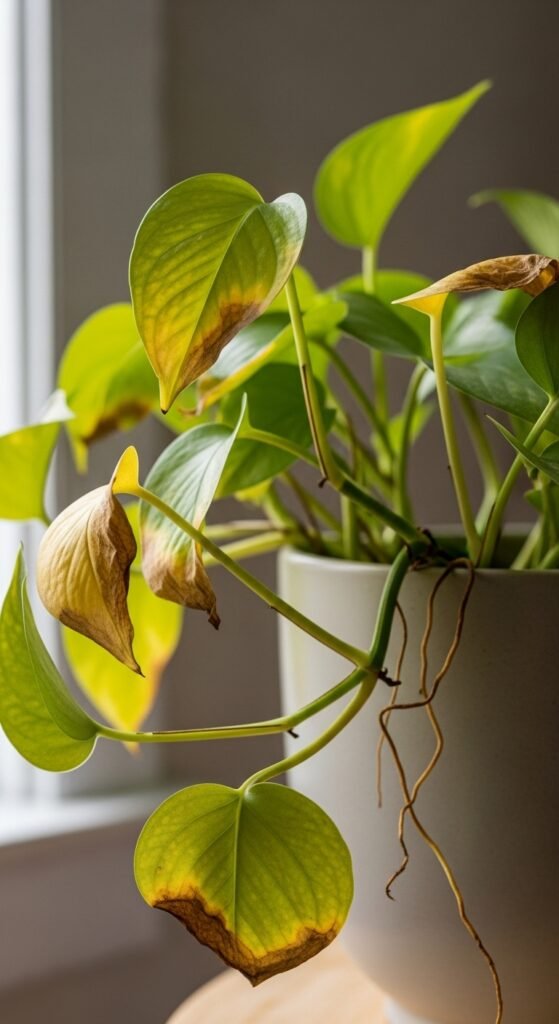
The first step in saving a dying pothos plant is observation. Pothos usually decline due to:
- Overwatering
- Poor drainage
- Low light
- Root damage
Experienced growers always look at the leaves and roots, not just the soil. Yellow leaves often point to water issues, while limp vines can signal root stress. Treating the symptom without fixing the cause rarely works.
Fix Overwatering Immediately
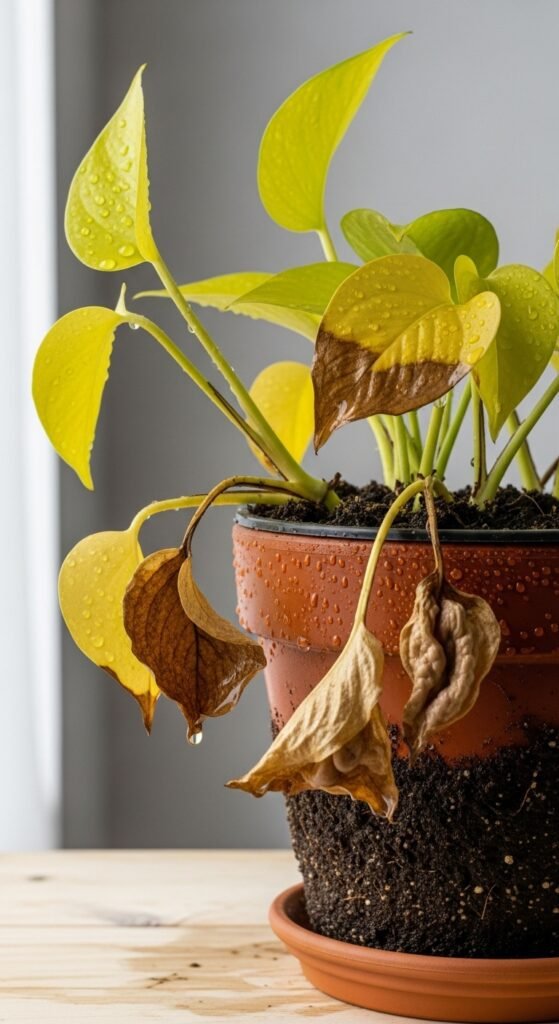
Overwatering is the most common reason pothos plants start dying. Pothos roots need oxygen, and constantly wet soil suffocates them.
A practical tip many plant owners rely on is switching to a well-draining pot with proper drainage holes. A simple moisture meter (commonly found on Amazon and used by many indoor gardeners) can help confirm when the soil is actually dry instead of guessing something the author has personally found helpful for preventing repeat mistakes.
Let the soil dry out halfway before watering again.
Check and Trim Damaged Roots
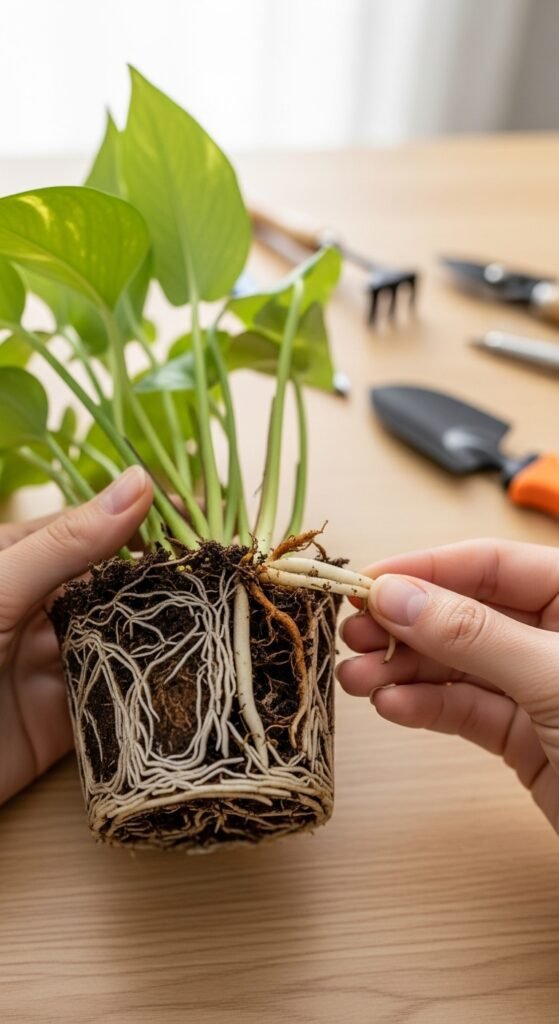
If the pothos is still struggling, gently remove it from the pot and inspect the roots.
- Healthy roots: firm and light-colored
- Rotted roots: dark, mushy, and smelly
Experienced plant keepers often trim dead roots using clean scissors and repot the plant in fresh soil. This step alone can completely turn around a dying pothos plant within weeks.
Repot Using Fresh, Airy Soil
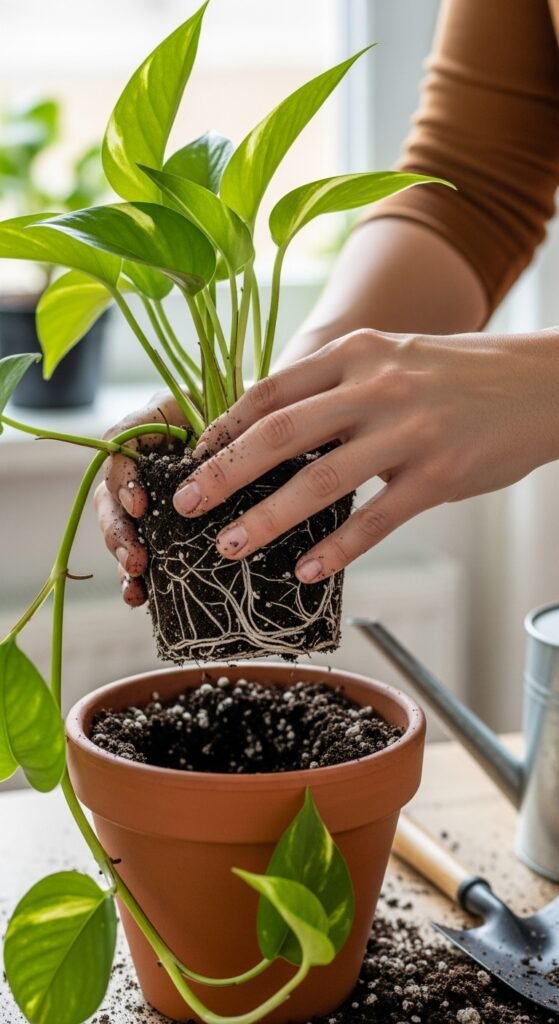
Old, compacted soil can hold too much moisture and prevent airflow. Repotting gives the plant a fresh start.
Many growers prefer a light indoor plant potting mix with added perlite (widely available on Amazon) because it improves drainage and root health. From real use, this type of soil helps pothos recover faster and reduces the risk of root rot returning.
Choose a pot only slightly bigger than the root ball—oversized pots hold excess water.
Move the Plant to Better Light
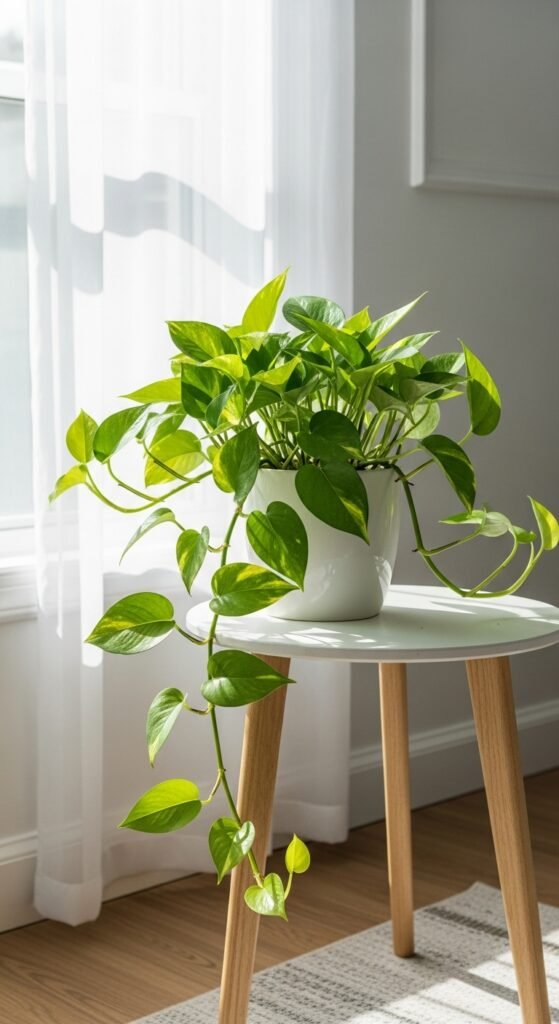
Pothos plants thrive in bright, indirect light. Too little light slows recovery, while direct sunlight can burn stressed leaves.
A common mistake is keeping a dying pothos in a dark corner. Once moved closer to a window with filtered light, many plant owners notice stronger leaves and new growth within a few weeks.
Light plays a major role in how to save a dying pothos plant successfully.
Remove Yellow or Damaged Leaves
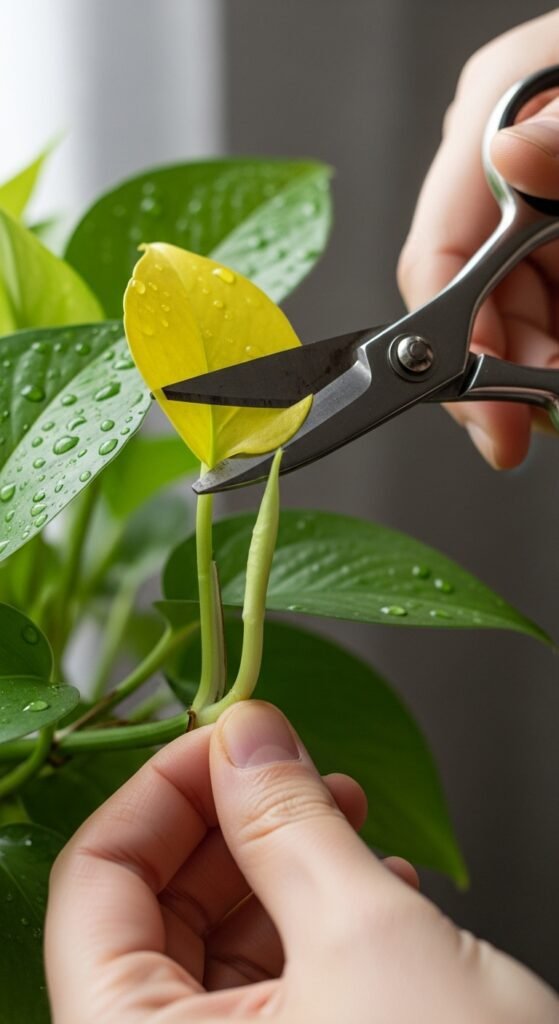
Yellow or damaged leaves won’t recover and only drain energy from the plant. Experienced growers regularly prune these leaves to redirect energy into healthy growth.
This also improves airflow around the plant and reduces the risk of pests or fungal issues. Clean cuts encourage new vines and fuller growth over time.
Be Patient and Keep Care Consistent
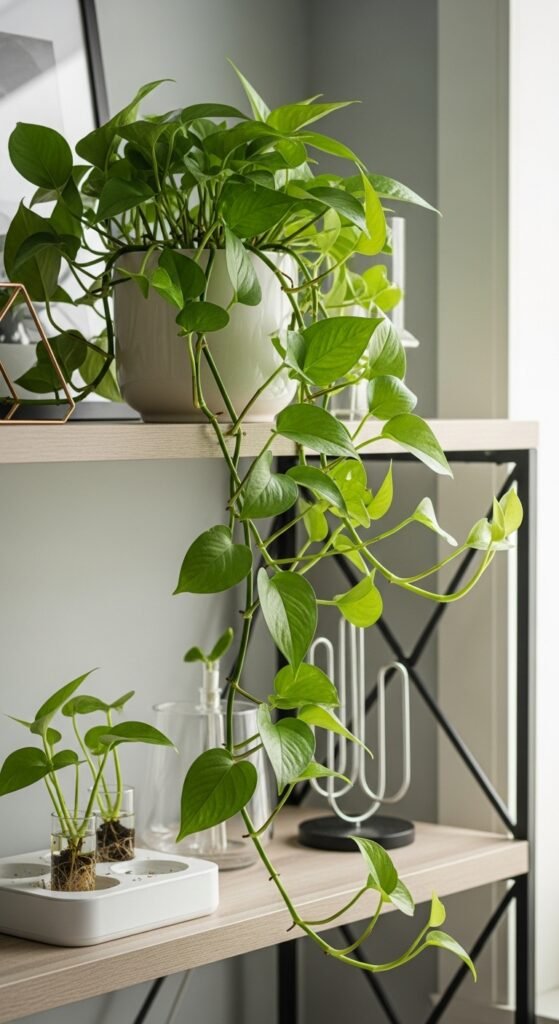
Pothos plants don’t bounce back overnight. Recovery takes time, especially if roots were damaged.
Plant experts often say:
“No new damage is progress.”
Stick to a consistent watering schedule, stable light, and avoid frequent changes. With patience, most pothos plants reward proper care with fresh green leaves and longer vines.
Final Thoughts: Saving a Dying Pothos Is Possible
Learning how to save a dying pothos plant is mostly about understanding what went wrong and correcting it gently. Pothos are forgiving plants, and with the right steps, they often recover beautifully.
By fixing watering habits, improving soil and light, and giving the plant time, even a struggling pothos can thrive again.