
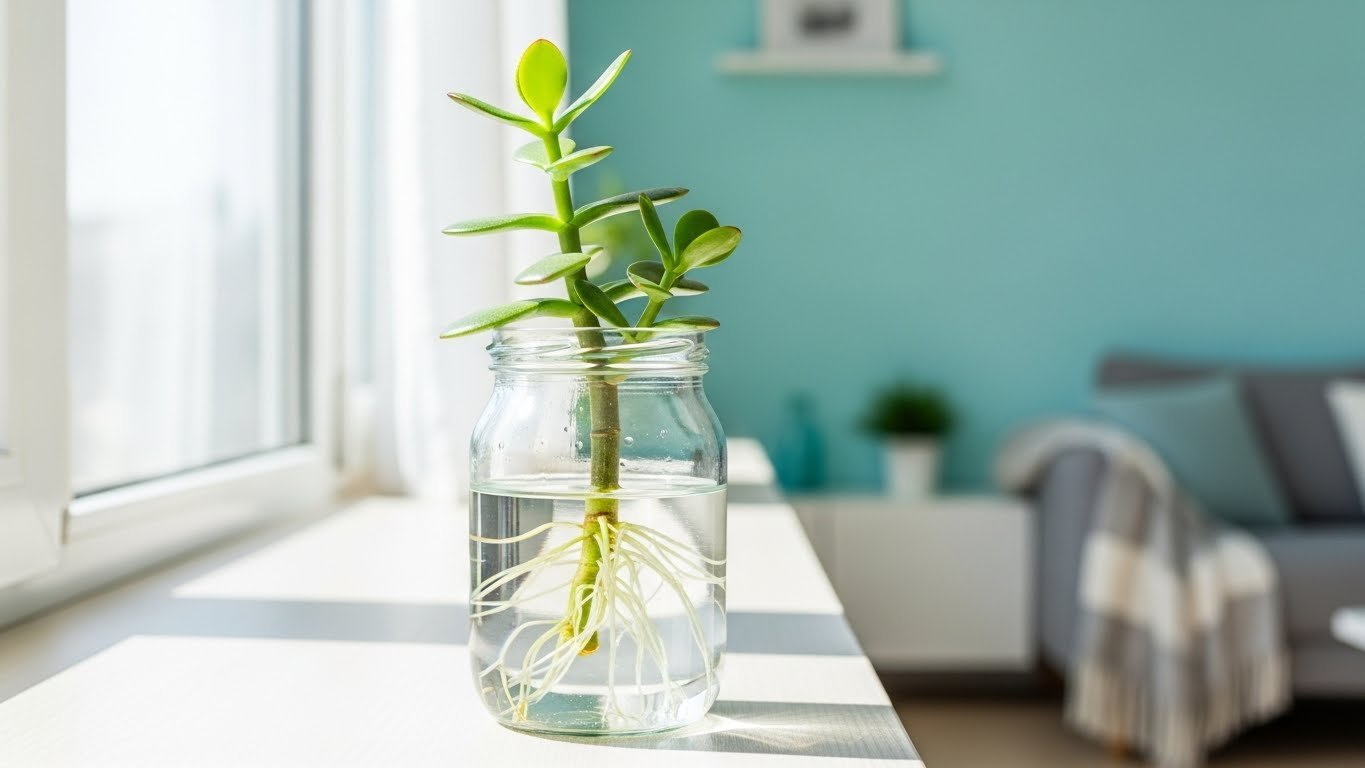
Propagating a Jade plant (Crassula ovata) in water can be a fun, visual way to grow new jade plants and honestly, watching the roots form in a glass jar feels a bit like magic. But because jade is a succulent (stores water in its leaves and stems), you need to be careful to do it right.
If you prefer soil method, check out my detailed guide: Jade Plant Propagation from Leaves 7 Easy Steps.
Here, I’ll guide you through how I propagate jade in water, explain what works, what to watch out for, and how to get healthy roots step by step.
✅ Why Water Propagation?
- It’s low-cost and very visual — you can actually see the roots growing. Smart Garden and Home+2ShunCy+2
- Good for beginners who want to experiment without messing up soil mixes.
- A clean glass jar + fresh water = no risk of soil‐borne pests or diseases. Plantophiles+1
That said — water propagation has trade‑offs. The roots you get in water are often delicate and may need extra care when transferring into soil. ShunCy+1
🌟 7 Steps to Propagate Jade Plant in Water Successfully
Here’s the exact method I follow to get good results when propagating jade in water:
1. Cut a Healthy Stem
- Choose a firm, healthy stem of about 3–4 inches with a few leaf nodes (where leaves join the stem). ShunCy+1
- Use a clean, sharp knife or sterilized scissors to make a clean cut just below a node. This helps avoid infections. Real Homes+1
2. Let the Cutting Callus (Dry)
- Place the cutting on a dry, clean surface — away from direct sun.
- Wait 2–5 days until the cut end dries and forms a protective layer (callus). This step is essential to avoid rot once placed in water. Greeny Gardener+1
3. Remove Lower Leaves
- Make sure that no leaves are submerged under water — they rot quickly.
- Remove all leaves that would sit below the water line. ehow.com+1
4. Place the Cutting in Water
- Fill a clean glass jar or vase with fresh, filtered or dechlorinated water. Tap water can contain chlorine which might harm delicate cuttings. ShunCy+1
- Use something like toothpicks or a small support if needed to keep the stem upright, with bottom submerged and leaves kept above water. Smart Garden and Home+1
- Place the jar in bright, indirect light — avoid direct hot sun which can overheat the water or scorch leaves. Greeny Gardener+1
5. Maintain Water Hygiene
- Change the water every 3–5 days (or sooner if it becomes cloudy) to prevent bacteria or fungus buildup. Smart Garden and Home+1
- Always use clean water and a clean container. Cleanliness matters — jade cuttings are sensitive.
6. Wait for Roots to Appear
- In 2–4 weeks, you should begin to see small roots emerging from the submerged end. The Garden Fixes+1
- Once roots are a few centimeters long (and healthy-looking), the cutting is ready for the next stage.
7. Transplant to Soil (Optional but Recommended)
- Water‑grown roots tend to be more delicate, so for long-term growth I recommend transferring to a well‑draining succulent/cactus potting mix. Plantophiles+1
- Let roots dry a bit (air out) if needed, then plant carefully in a pot with drainage holes. Keep soil slightly moist at first, then follow typical jade‑care routines (dry between waterings, bright light, etc.). The Gardening Fix+1
⚠️ What to Know — Pros & Cons of Water Propagation (From My Experience)
✅ Pros:
- You can watch roots grow — very satisfying and great for beginners.
- No soil required initially, which reduces mess and soil‑borne issues.
- Good way to produce multiple new plants if you have many cuttings.
⚠️ Cons / Things to Watch For:
- Water‑rooted plants often have softer, more fragile roots — require gentle transition to soil. ShunCy+1
- Higher risk of rot or fungal infection, especially if water isn’t changed regularly or cutting wasn’t callused well. Martha Stewart+1
- Some jade purists say soil propagation gives stronger, more stable plants long‑term. ShunCy+1
🔗 Related Method: Leaf Propagation (Soil-Based)
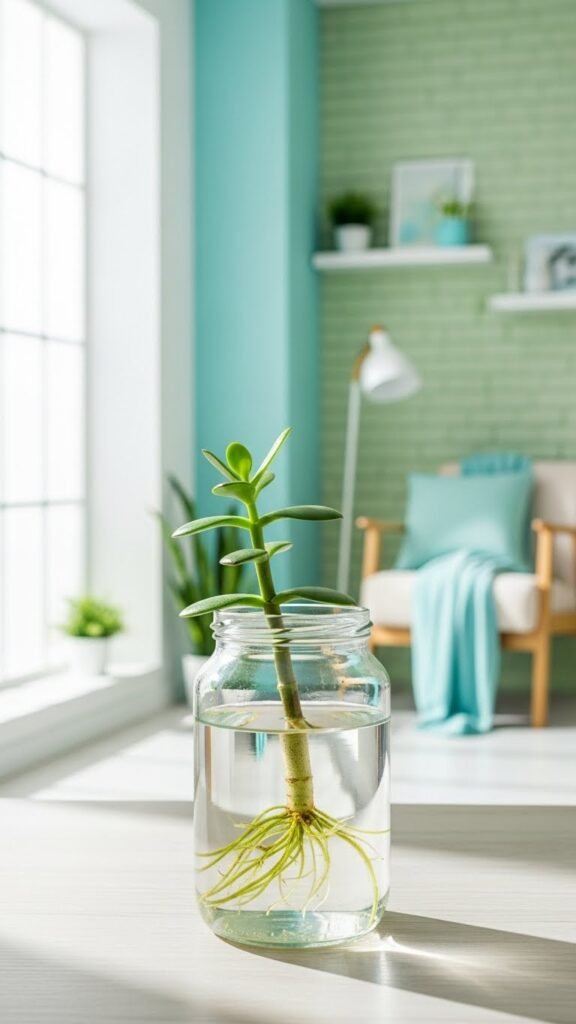
If you prefer a tried‑and‑true method, you can also propagate jade from leaves. I wrote a full guide earlier: Jade Plant Propagation from Leaves — 7 Easy Steps. That method is more forgiving but slower — a good alternative if you care more about long-term stability than speed.
🛠️ My Tips for Best Success (What I Always Do)
- Always sterilize cutting tools — helps reduce infection risk.
- Use filtered water (let tap water sit a day or use rain water if possible).
- Keep cuttings in bright, indirect light — not scorching sun.
- Change water often, even if it doesn’t look dirty.
- Transition to soil gradually — don’t rush it.
- Be patient: succulents like jade are slow growers.
🌱 Final Thoughts
Propagating jade plants in water is like a little science experiment and sometimes it feels like magic when you see roots sprouting in a glass jar. It’s simple, affordable, and beginner‑friendly.
If you want quick results and enjoy watching growth happen, water propagation is a great option. But for long-term strength and resilience, combining water rooting with eventual soil transition tends to give the best outcome.
Whether you choose water or soil or a little of both you’ll end up with a new jade plant that’s uniquely yours.
Happy propagating!