
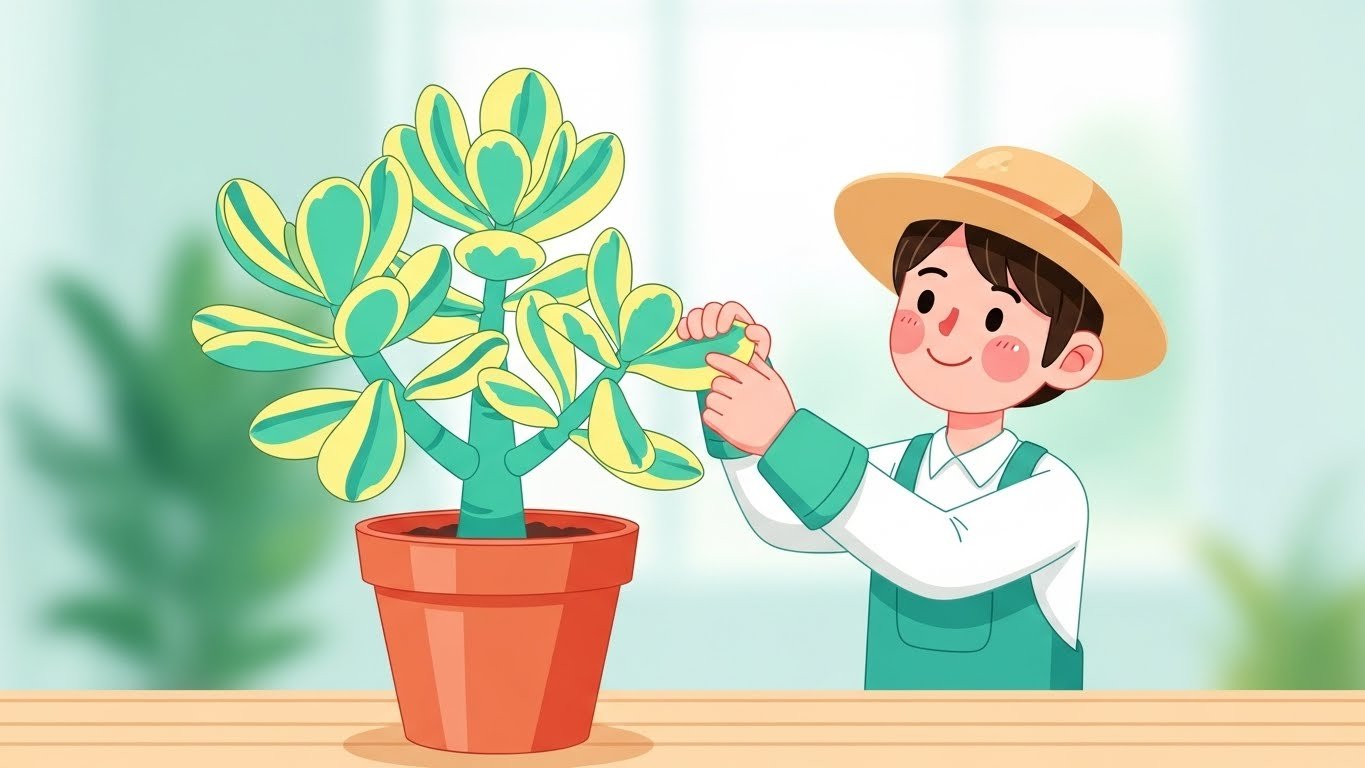
Yellow leaves on a jade plant can be worrying, especially when the plant is known for its thick, healthy green foliage. Many indoor gardeners panic when they notice jade plant leaves turning yellow, assuming the plant is dying. In reality, yellowing leaves are the jade plant’s way of communicating that something in its care routine needs adjustment.
This guide explains why jade plant yellow leaves happen, how to identify the exact cause, and what actually works to fix the problem—based on real experience, plant science, and trusted care practices.
Understanding Jade Plants (Crassula ovata)
Jade plants are succulents native to South Africa, adapted to store water in their fleshy leaves. This makes them drought-tolerant but also sensitive to excess moisture and poor soil conditions.
Because jade plants grow slowly and conserve resources, changes in leaf color—especially yellowing—often signal stress long before the plant collapses. Catching the issue early makes recovery much easier.
1. Overwatering: The #1 Cause of Jade Plant Yellow Leaves
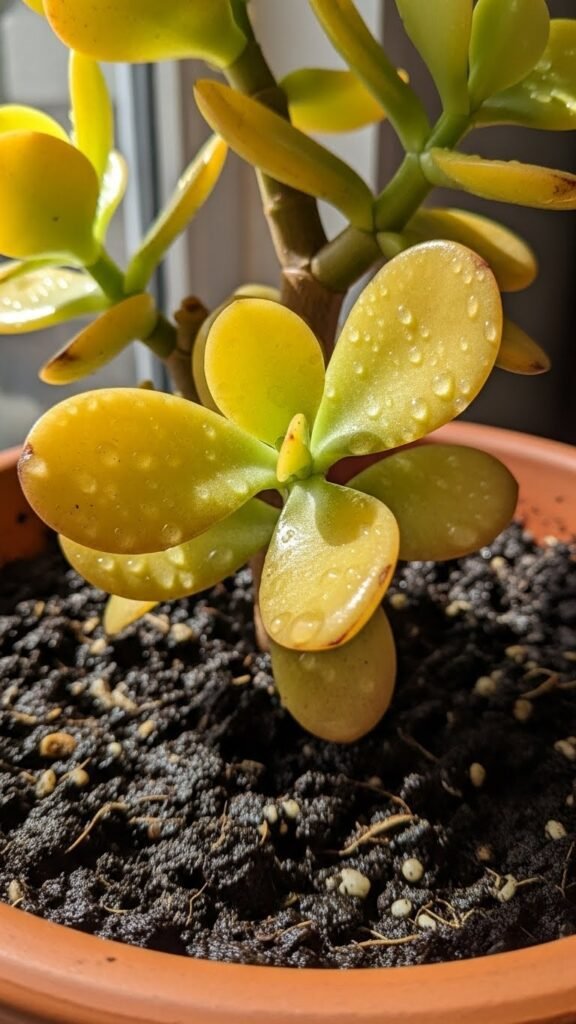
In most cases, overwatering is the main reason jade plant leaves turn yellow.
What Happens
When jade roots sit in wet soil for too long, oxygen levels drop. Roots begin to rot, and the plant can no longer absorb nutrients properly. The first visible symptom is yellow, soft, or translucent leaves.
Real Experience Insight
Many plant owners water jade plants like regular houseplants. The author of this guide experienced the same mistake early on—watering weekly regardless of soil dryness. Within weeks, the jade plant developed yellow lower leaves that eventually fell off.
How to Fix It
- Stop watering immediately
- Let soil dry completely
- Remove yellow, mushy leaves
- Check roots for rot if the issue continues
2. Poor Drainage & Wrong Soil Mix
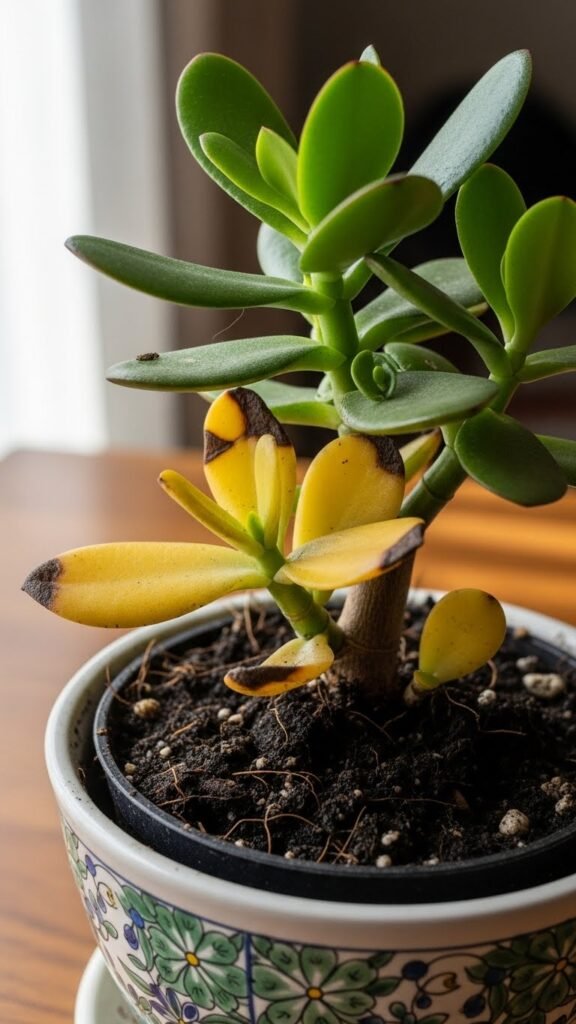
Even if watering frequency is correct, poor drainage can cause the same yellowing effect.
Signs
- Yellow leaves despite infrequent watering
- Soil stays wet for days
- Pot has no drainage holes
Expert Tip
Jade plants require fast-draining soil. Standard potting soil holds too much moisture and suffocates roots.
Trusted Product Recommendation #1
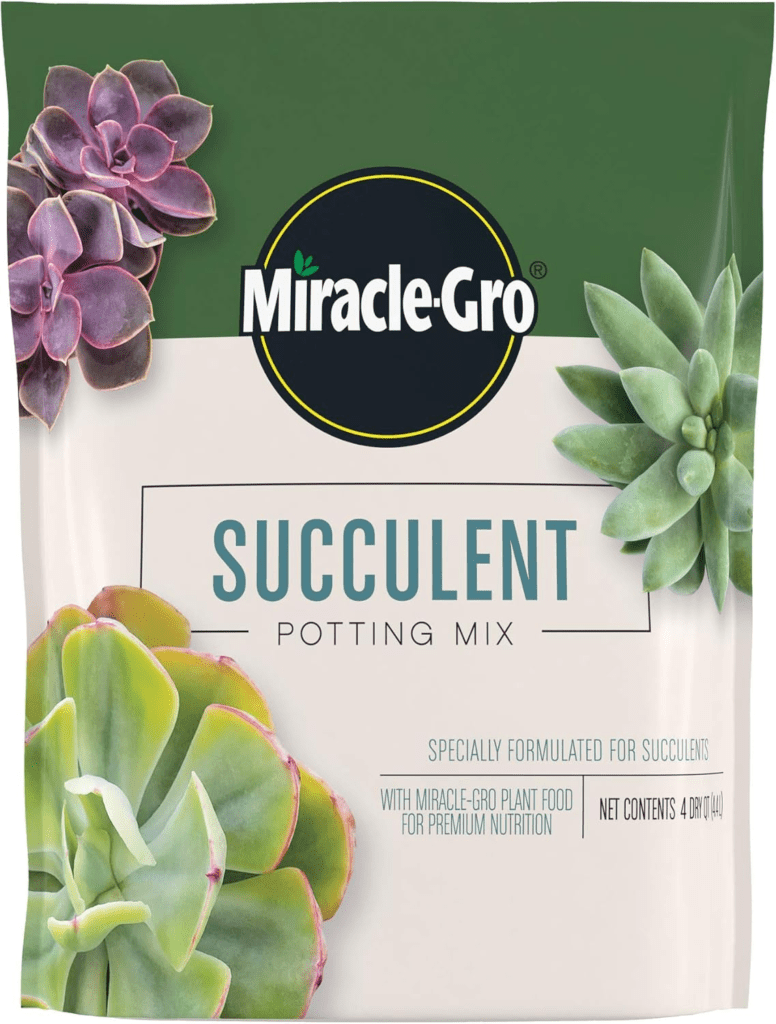
Miracle-Gro Cactus, Palm & Citrus Potting Mix
The author has personally tested this soil mix for jade plants and found it significantly reduces water retention while keeping roots stable. It drains quickly, prevents soggy soil, and supports long-term growth without frequent repotting.
BUY NOW
(Recommended because it solves the most common cause of yellow leaves—poor drainage—without complicated mixing.)
3. Lack of Proper Light
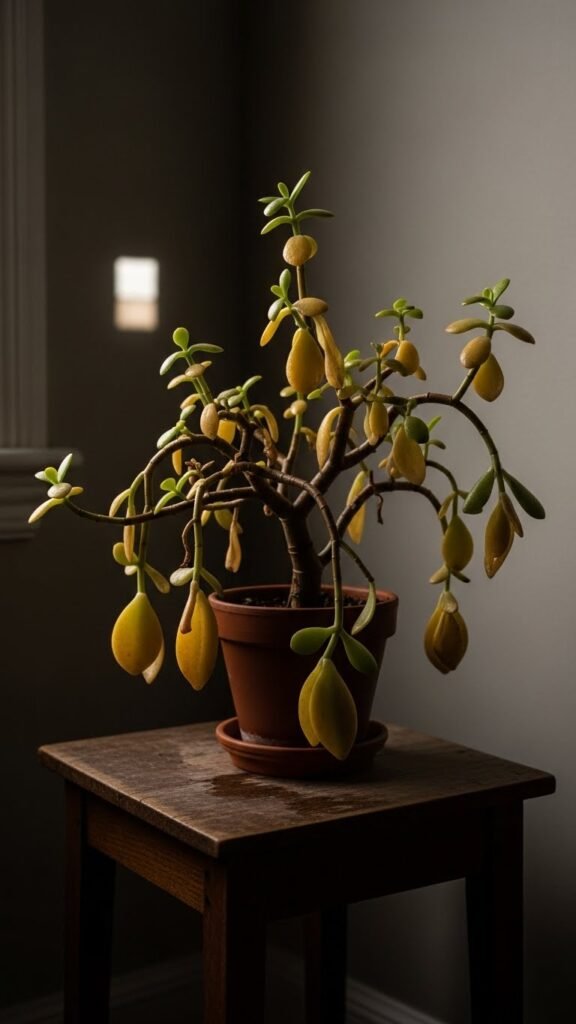
Jade plants need bright, indirect sunlight to maintain leaf color.
What Happens
In low light:
- Leaves lose chlorophyll
- Growth slows
- Yellowing begins, especially on older leaves
Where This Often Goes Wrong
Many people place jade plants in dim rooms because they’re labeled “low maintenance.” While hardy, jade plants are not low-light plants.
Solution
- Place near a south- or east-facing window
- Avoid dark corners
- Rotate the plant weekly for even exposure
4. Natural Leaf Aging (Not Always a Problem)
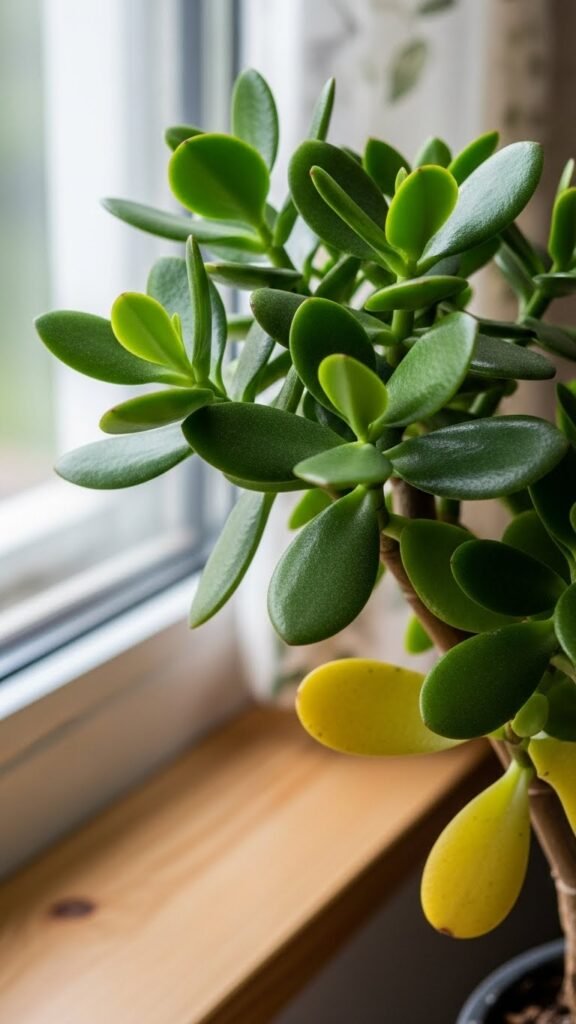
Sometimes, yellow leaves are completely normal.
How to Tell
- Only 1–2 bottom leaves turn yellow
- Leaves are firm, not mushy
- New growth at the top looks healthy
Explanation
As jade plants mature, they shed older leaves to conserve energy. This is part of their natural growth cycle.
No treatment is needed—simply remove the yellow leaves gently.
5. Nutrient Deficiency or Overfertilizing
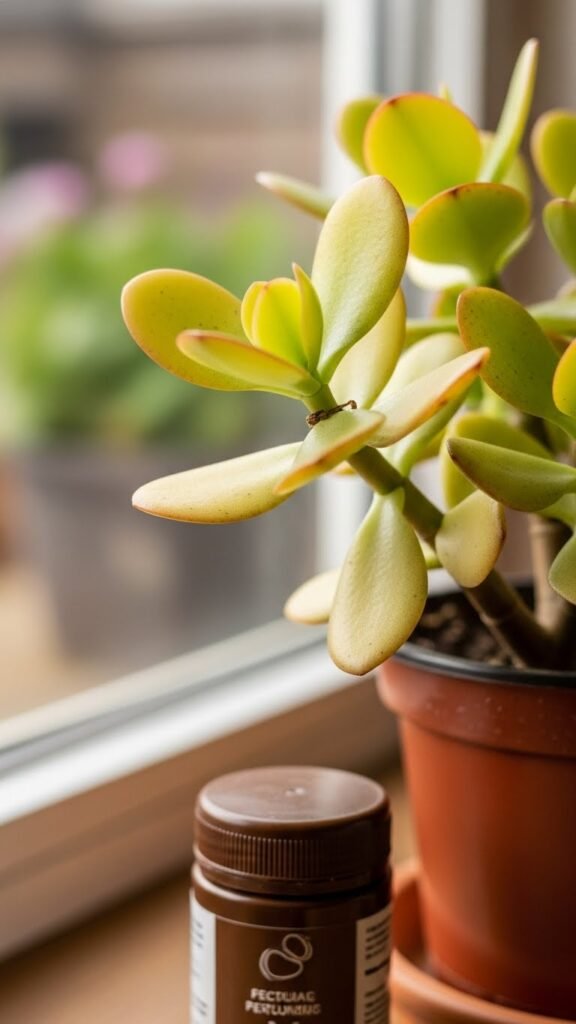
Both too little and too much fertilizer can cause jade plant leaves turning yellow.
Deficiency Signs
- Pale yellow leaves
- Slow growth
- Thin stems
Overfertilizing Signs
- Yellow or burnt leaf edges
- White residue on soil
- Sudden leaf drop
Trusted Product Recommendation #2
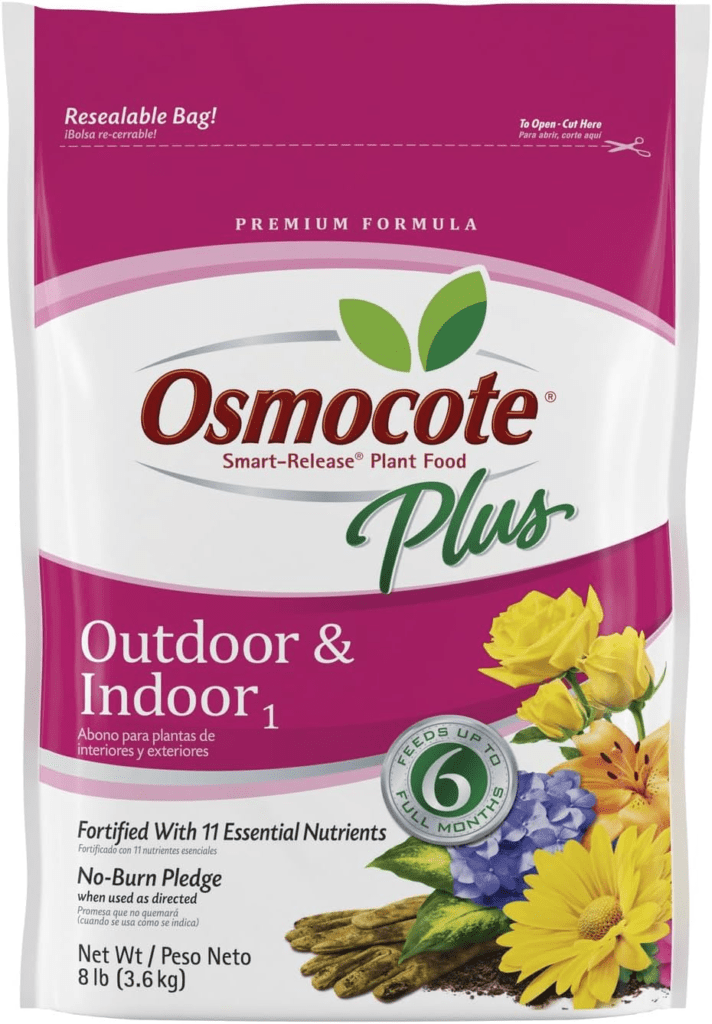
Osmocote Smart-Release Succulent & Cactus Fertilizer
The author uses this slow-release fertilizer because it feeds jade plants gently over time. Unlike liquid fertilizers, it prevents nutrient shock and reduces the risk of leaf yellowing caused by overfeeding.
BUY NOW
(Recommended because jade plants need minimal feeding, and this option removes guesswork.)
6. Temperature Stress & Drafts
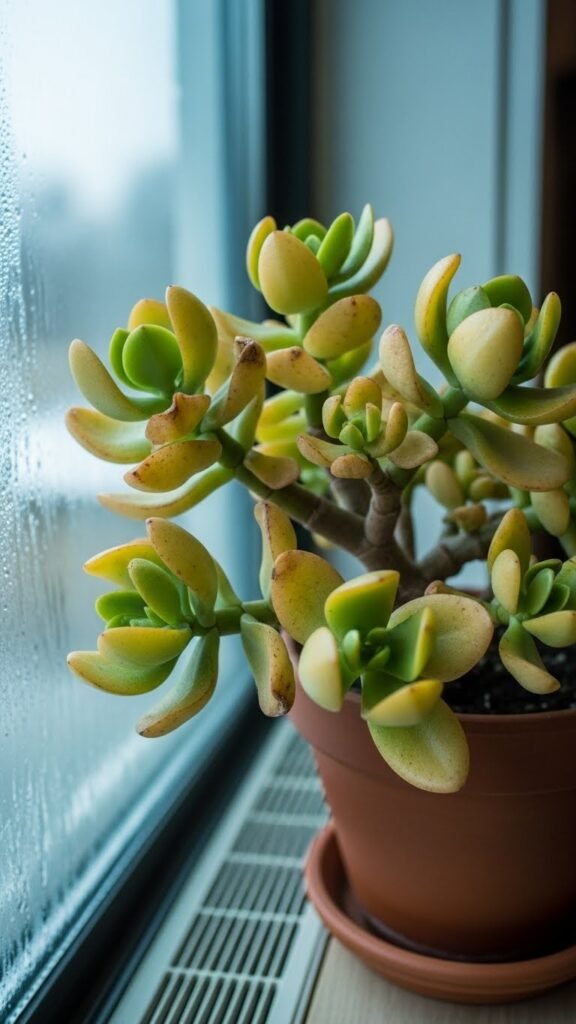
Jade plants prefer stable indoor temperatures between 65–75°F (18–24°C).
Common Mistakes
- Placing near air conditioners
- Exposure to cold windows in winter
- Sudden temperature swings
Symptoms
- Yellowing leaves
- Leaf drop
- Wrinkled texture
Move the plant away from drafts and sudden temperature changes to stabilize leaf color.
7. Root Bound or Overgrown Roots
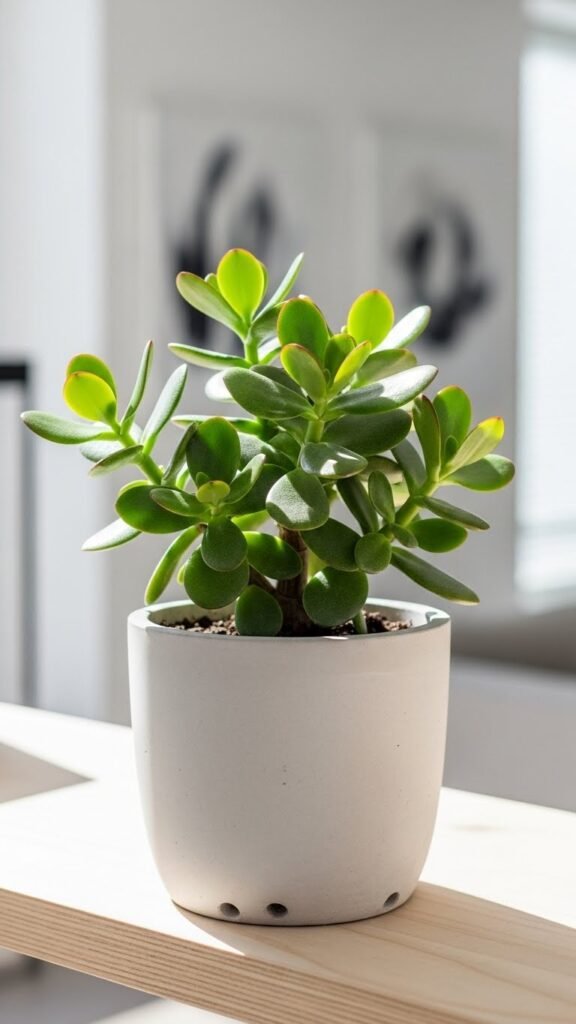
When jade plants outgrow their pots, roots circle tightly and restrict nutrient uptake.
Signs
- Yellow leaves despite good care
- Roots visible from drainage holes
- Stunted growth
Fix
Repot every 2–3 years using:
- Slightly larger pot
- Fresh, well-draining soil
- Proper drainage holes
8. Pests Causing Yellow Leaves
Although rare, pests can cause yellowing.
Watch For
- Sticky residue (mealybugs)
- Tiny webs (spider mites)
- Leaf discoloration
Solution
- Wipe leaves with diluted neem oil
- Isolate infected plants
- Avoid chemical overuse
How to Save a Jade Plant With Yellow Leaves (Step-by-Step)
- Stop watering immediately
- Check soil moisture and drainage
- Move plant to bright indirect light
- Remove damaged leaves
- Repot if soil is soggy
- Resume watering only when soil is fully dry
Preventing Yellow Leaves Long-Term
- Water only when soil is dry
- Use cactus soil
- Provide bright light
- Fertilize lightly (2–3 times per year)
- Avoid temperature extremes
Final Thoughts: Yellow Leaves Are a Warning, Not a Death Sentence
Yellow leaves don’t mean your jade plant is dying. They mean it’s asking for better care. With proper watering habits, good soil, stable light, and minimal feeding, jade plants recover beautifully.
Many plant owners who fix yellowing issues report stronger stems, richer green leaves, and even faster growth within weeks.