
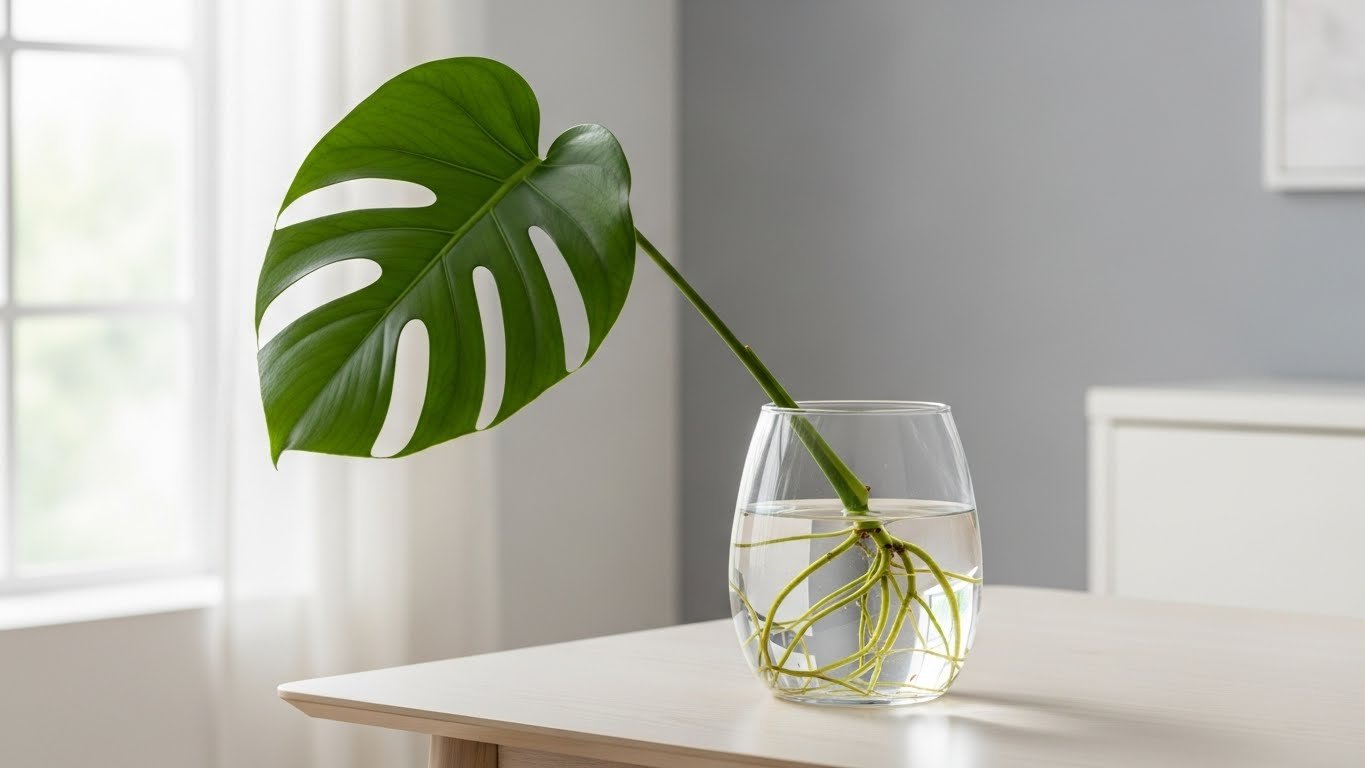
Monstera plants are famous for their bold, split leaves and easy-going nature. While most people grow them in soil, many plant lovers are now exploring monstera plant care in water as a clean, modern, and surprisingly effective alternative.
Growing a Monstera in water isn’t just possible — it can be healthy, beautiful, and low-maintenance when done correctly. This guide explains everything you need to know, from setup to long-term care, common mistakes, and expert tips to keep your water-grown Monstera thriving.
Can Monstera Live in Water Long-Term?
Yes, Monstera can live in water long-term, not just temporarily for propagation. With proper care, Monsteras grown in water can develop strong root systems and maintain healthy foliage for months or even years.
However, water-grown Monsteras behave slightly differently than soil-grown ones. They require:
- Clean water
- Adequate light
- Regular maintenance
- Patience
Understanding these differences is the key to success.
Why Grow a Monstera in Water?
Many indoor plant owners choose water growth because it offers several benefits:
- Cleaner and mess-free (no soil spills)
- Easy root monitoring
- Lower risk of pests
- Aesthetic, modern look
- Ideal for small spaces and beginners
Water-grown Monsteras are also popular for minimalist décor and indoor plant styling.
How to Start Monstera Plant Care in Water
1. Choose the Right Cutting
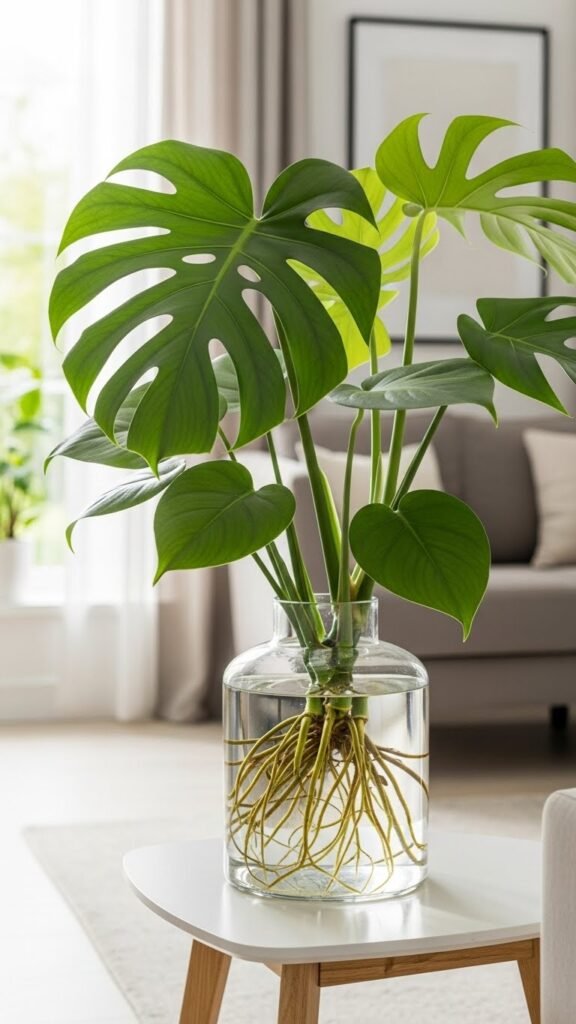
Successful monstera plant care in water starts with the right cutting.
Make sure your cutting has:
- At least one healthy node
- One or two leaves
- Optional aerial root (helpful but not required)
A leaf alone without a node will not survive long-term in water.
2. Place the Cutting Correctly in Water
Position matters more than many beginners realize.
- Submerge only the node and roots
- Keep leaves above water
- Use room-temperature water
- Ensure the cutting stands upright
Leaves sitting in water can rot quickly, so placement is critical.
Light Requirements for Water-Grown Monstera
Monsteras grown in water need bright, indirect light.
Best light conditions:
- Near a bright window with filtered light
- East- or north-facing windows
- No harsh direct sunlight
Too little light slows growth, while direct sun can damage leaves and heat the water.
How Often to Change the Water
This is one of the most important parts of monstera plant care in water.
Water-changing schedule:
- Change water every 5–7 days
- Rinse roots gently during each change
- Clean the container if algae appears
Fresh water prevents:
- Root rot
- Bad odor
- Bacterial growth
Never top off old water without changing it completely.
Root Health: What to Look For
Healthy water-grown Monstera roots are:
- White or light tan
- Firm, not mushy
- Growing steadily
Warning signs:
- Brown or black roots
- Slimy texture
- Foul smell
If you see unhealthy roots, trim them immediately and refresh the water.
Leaf Care for Monsteras in Water
Leaves still need attention even without soil.
Healthy leaves:
- Glossy green color
- Firm structure
- Gradual new growth
Common issues:
- Yellow leaves → poor light or stagnant water
- Drooping leaves → stress or temperature shock
- Brown edges → low humidity or old water
Gently wiping leaves with a damp cloth helps keep them clean and efficient at photosynthesis.
Temperature & Environment
Monsteras prefer warm, stable indoor conditions.
Ideal environment:
- Temperature: 65–85°F (18–29°C)
- No cold drafts
- Away from heaters and AC vents
Cold water or sudden temperature changes can shock roots.
Can You Grow a Large Monstera in Water?
Yes, but growth is usually slower than in soil.
Water-grown Monsteras:
- Stay manageable in size
- Develop thinner but healthy roots
- Are easier to control indoors
For very large Monsteras, water growth works best when combined with support like stems resting naturally or gentle training (without forcing).
Aerial Roots in Water-Grown Monstera
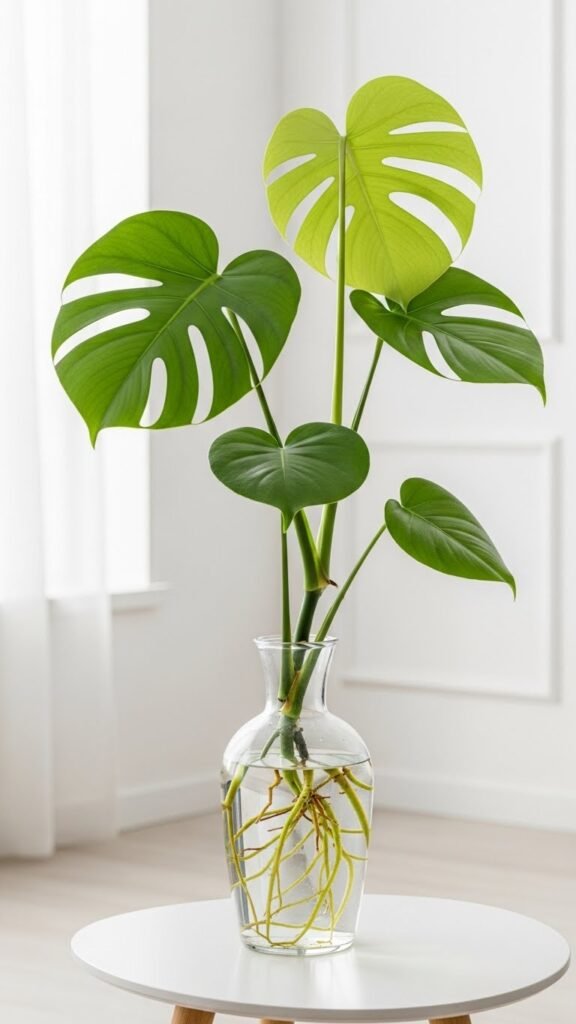
Aerial roots are normal and healthy.
You can:
- Let them grow freely
- Guide them into water
- Leave them exposed to air
They help with stability and moisture absorption and are not a problem.
Common Mistakes to Avoid
Avoid these mistakes to keep your Monstera healthy in water:
- Using a cutting without a node
- Leaving water unchanged for weeks
- Submerging leaves
- Placing in direct sunlight
- Ignoring root condition
- Using cold or chemically harsh water
Most failures come from neglecting water changes and light placement.
Soil vs Water: Which Is Better?
Both methods work, but they serve different goals.
Water is best if you want:
- Clean aesthetics
- Easy maintenance
- Root visibility
- Slower, controlled growth
Soil is better if you want:
- Faster growth
- Larger leaves
- Traditional houseplant care
Many plant owners start in water and later transition to soil.
Final Thoughts
Monstera plant care in water is a beautiful and beginner-friendly way to grow this iconic plant. With clean water, bright indirect light, and simple weekly maintenance, Monsteras can thrive without soil.
Water-grown Monsteras may grow more slowly, but they reward patience with healthy roots, elegant foliage, and a modern indoor look. Whether you’re experimenting or fully committing to water culture, this method is both practical and visually stunning.