
Pothos plants are one of my favorite indoor plants. They’re hardy, low-maintenance, and instantly elevate any space with their cascading vines. But if you want your pothos to truly thrive with lush leaves, vibrant color, and strong growth a good fertilizer routine is essential.
Over the years, I’ve experimented with different fertilizers and techniques. Today, I’ll share everything I’ve learned about pothos plant fertilizer, including types, how often to fertilize, and tips to avoid common mistakes. I’ll also link to my previous guide on Pothos Plant Repotting, because fertilizing works best when your plant has fresh soil and healthy roots.
🌱 Why Fertilizer Matters for Pothos Plants
Even though pothos are hardy, they need nutrients to grow at their best. Without fertilizer, you might notice:
- Slower growth
- Pale or yellowing leaves
- Weak vines
- Reduced leaf size
Fertilizer replenishes the nutrients in the soil that your plant has used up. When combined with good pothos plant care proper watering, adequate light, and occasional repotting fertilization can make a dramatic difference.
🌿 Types of Fertilizers for Pothos
There are several fertilizer options you can use, depending on your preference and your plant’s needs:
1. Liquid Fertilizers
These are water-soluble fertilizers that you mix with water and apply directly to the soil. They provide immediate nutrients, making them perfect for indoor pothos. I like using a balanced 10-10-10 fertilizer diluted to half strength.
2. Slow-Release Fertilizers
Slow-release pellets gradually feed the plant over weeks or months. They’re low-maintenance and perfect if you don’t want to fertilize frequently. I usually sprinkle a small amount on top of the soil after repotting.
3. Organic Fertilizers
Organic options like compost, worm castings, or liquid seaweed are gentle and safe for indoor plants. They not only provide nutrients but also improve soil health over time.
🌱 How Often to Fertilize Pothos
- Spring & Summer (active growth): Every 4–6 weeks for liquid fertilizer, or once per season for slow-release.
- Fall & Winter (dormant period): Fertilize minimally or not at all, because the plant grows slower and doesn’t require extra nutrients.
I personally follow this schedule, and it keeps my indoor pothos plants lush without overfeeding them.
🌿 My Step-by-Step Fertilizing Routine
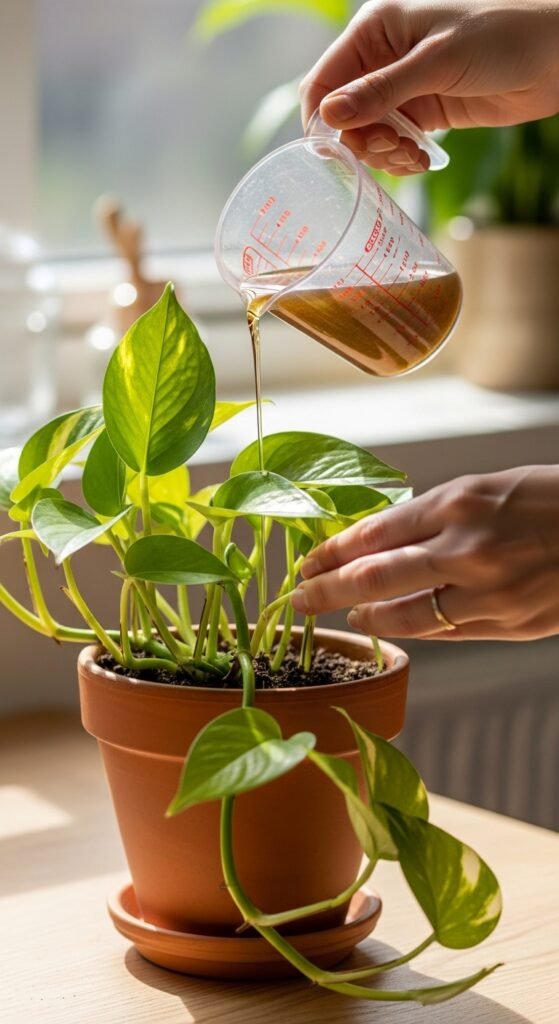
- Check the soil – Make sure it’s moist but not soggy. Fertilizing dry soil can burn the roots.
- Choose the right fertilizer – I prefer a balanced liquid fertilizer, like Miracle-Gro Indoor Plant Food, diluted to half strength.
- Apply carefully – Pour evenly over the soil, avoiding leaves.
- Observe – Within 2–3 weeks, I usually see new, vibrant growth.
- Combine with good care – Water regularly, provide indirect light, and repot when necessary. For more details on repotting, check out my Pothos Plant Repotting Guide for expert tips.
🌱 Common Fertilizer Mistakes to Avoid
- Overfertilizing: Can burn roots and cause leaf yellowing.
- Fertilizing dry soil: Always water before applying liquid fertilizer.
- Using fertilizers too high in nitrogen: Leads to lots of green growth but fewer leaves.
- Ignoring dormant periods: Fertilizing in winter can stress the plant.
🌿 Recommended Fertilizer Products I Use
Miracle-Gro Indoor Plant Food – Easy to use, gentle, and effective for pothos.
Espoma Organic Indoor Plant Food – Great organic alternative that improves soil health and keeps indoor plants thriving.
I’ve tried both and alternate depending on my plant’s season and growth stage. Either one works beautifully for lush, healthy vines.
🌱 Extra Tips for Thriving Pothos
- Pair fertilization with proper pothos plant care, like adequate light and humidity.
- Combine with climbing or hanging ideas to help vines grow elegantly.
- Refresh soil occasionally — you can use tips from my Pothos Plant Repotting guide to maximize nutrient uptake.
- Monitor leaves for signs of over or under-fertilization — color and texture are your best indicators.
🌿 Final Thoughts
Fertilizer is a simple but powerful tool to make your pothos plant flourish. With the right schedule, type, and care routine, you can enjoy vibrant, cascading vines year-round. Combining fertilization with proper watering, lighting, and repotting ensures your pothos grows healthy and stunning, whether it’s in a hanging basket, climbing up a trellis, or decorating your indoor wall.