
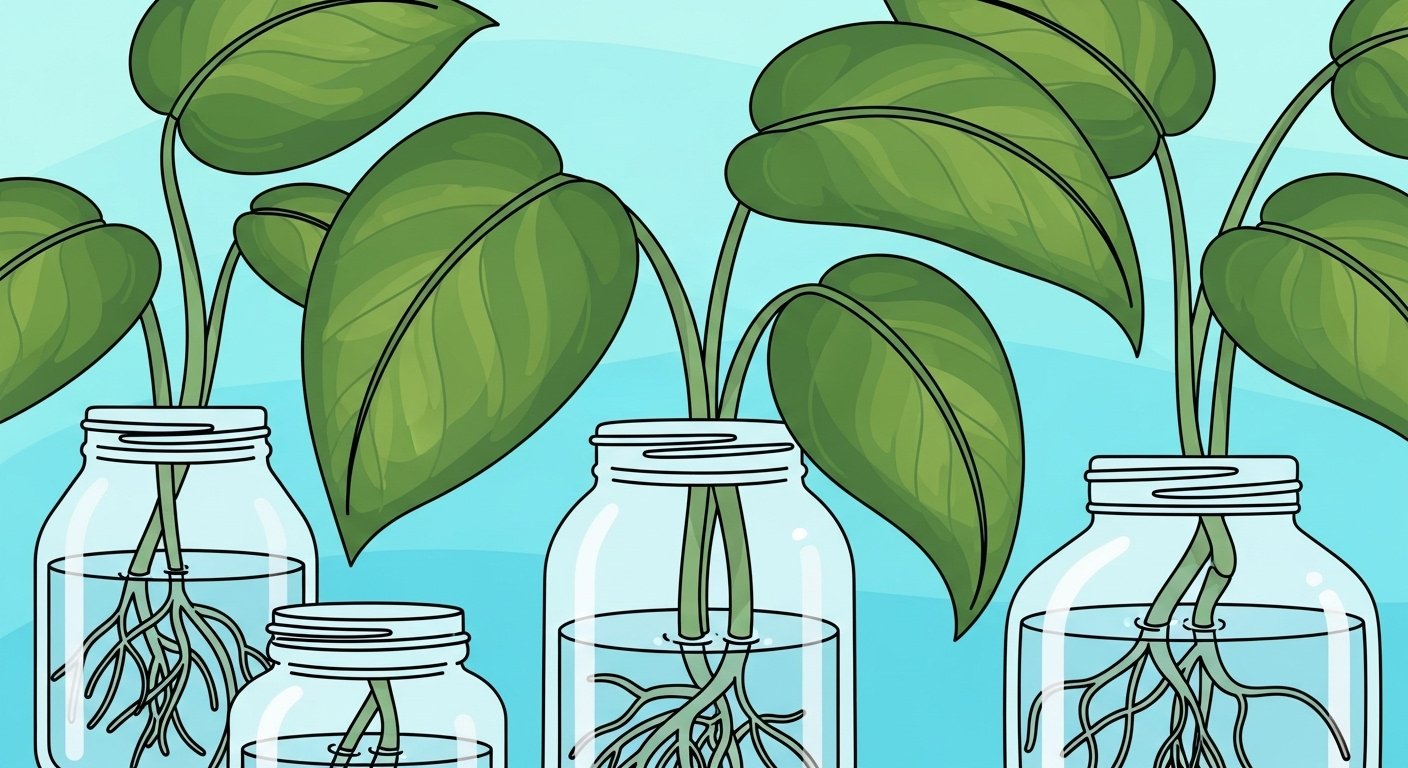
Pothos Plant Propagation in Water
If you want a fast, easy, and almost fail-proof way to grow new pothos plants, water propagation is truly the best method. I’ve propagated pothos in soil, moss, LECA, and water and honestly, nothing beats watching roots slowly develop in a clear glass jar. Not only is it satisfying, but pothos actually thrive in water for months (or even years!) if you care for them correctly.
Whether you’re propagating Golden, Marble Queen, N’Joy, Jade, Neon, Satin, or even a variegated beauty, this guide walks you step-by-step through everything you need from choosing cuttings to transferring them into soil later.
I’ll also link a few of my helpful guides, like how to repot pothos, how to water a pothos plant, and pothos climbing ideas, so you can grow your new baby plants into beautiful indoor decor.
Let’s begin!
🌱 Why Water Propagation Works So Well for Pothos
Pothos are naturally vigorous growers. Their vines have nodes, which are tiny growth points where new roots can form once submerged in water. Because pothos are humidity lovers, keeping the nodes underwater keeps the environment ideal for root development.
Water propagation:
- lets you see root growth clearly
- prevents soil-related fungal problems
- is perfect for beginners
- works with all pothos varieties
- creates aesthetic indoor decor — especially in glass vases
- gives you endless plants to style across your home
You can even style water-propagated pothos as part of bathroom decor, shelf styling, or wall-mounted displays.
🌿 What You Need for Water Propagation
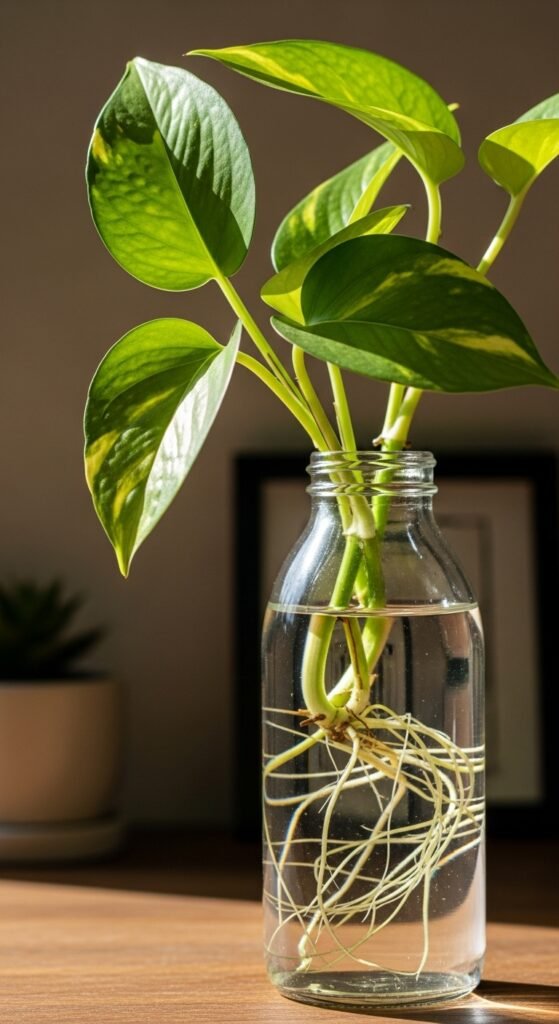
Luckily, you only need a few things. Here’s what I personally use:
✔ Clean scissors or pruning shears
Sharp, clean tools prevent infection and make precise cuts.
✔ A clear glass jar or vase
Transparent containers help you monitor roots and water clarity.
→ The Aquori Clear Glass Propagation Bottles on Amazon work beautifully. I’ve used them and love how they support longer vines without tipping.
✔ Filtered or room-temperature water
Chlorine can slow root growth; filtered is best.
✔ A healthy pothos vine
✂️ Step 1: Choose the Right Pothos Cutting
This step determines how fast your propagation succeeds.
Choose a healthy vine with:
- bright green leaves
- no signs of pests
- no mushy stems
- at least 2–4 nodes
Nodes are essential — without a node, roots cannot develop.
Cut ½ inch below a node to give the cutting a healthy base.
💧 Step 2: Prepare the Cuttings Properly
Once you have a vine section:
Remove the bottom leaf
It prevents rot once underwater.
Keep at least one leaf above the jar
This ensures the plant can photosynthesize.
If your pothos is variegated (Marble Queen, N’Joy, Pearls & Jade), choose cuttings with some green on the node — they root faster.
🌊 Step 3: Place the Cuttings in Water
Now for the easy part!
Place your cuttings in a clean glass jar and ensure:
- nodes are underwater
- leaves stay above water
- the jar gets bright, indirect light
Avoid direct sunshine — it encourages algae.
Tip: If you propagate several cuttings together, they root faster because they create a mini humidity zone.
🔁 Step 4: Maintain the Water the Right Way
This step makes or breaks your propagation.
Here’s what I do:
✔ Change the water every 4–6 days
Fresh water = oxygen-rich water = faster root growth.
✔ Rinse the jar when algae forms
A mild scrub prevents bacteria growth.
✔ Use filtered water
Pothos cuttings dislike harsh tap chemicals.
If you want to elevate your setup, the HOMENOTE Propagation Glass Vase Set from Amazon looks beautiful and keeps vines upright without slipping.
🌱 Step 5: Watch for Root Growth (What to Expect)
Within 7–14 days, you’ll see:
- tiny white roots
- bumps enlarging along nodes
- healthy firm stems
By 4–6 weeks, most pothos cuttings will have 2–3 inch roots, which is the perfect growth stage.
Signs of healthy propagation:
- roots thickening over time
- new leaves forming
- bright green growth at the tip
Signs of trouble:
- brown or mushy roots
- yellowing leaves
- foul smell
If anything rots, simply remove the bad cutting and refresh the water.
🌿 Step 6: Keep Pothos in Water or Transfer to Soil
You have two choices — both are perfectly fine.
✔ Option A: Keep Them in Water Permanently
Pothos can live in water for months or years.
Just refresh the water regularly and add liquid fertilizer occasionally.
Use a very diluted fertilizer — pothos roots in water are sensitive.
✔ Option B: Transfer to Soil
If you want a fuller plant:
- wait until roots reach 2–3 inches
- plant them in well-draining pothos potting mix
- water lightly
- keep in bright, indirect light
When transferring to soil, check my guide on how to repot pothos — it will help you avoid transplant shock.
🌱 Step 7: Help Your Baby Pothos Grow Faster
Here are my favorite tips:
✔ Give bright, indirect light
This boosts leaf and root growth.
✔ Use a warm room
Cold environments slow everything down.
✔ Add cuttings together
They grow bushier and faster.
✔ Keep the jar clean
Healthy water = healthy roots.
You can even use your new plant babies to create:
- pothos wall climbing decor
- aesthetic pothos shelf styling
- bathroom pothos setups
- hanging pothos displays
or train them on trellises (see my pothos climbing ideas article for this).
💚 Final Thoughts: Water Propagation Makes Pothos Multiply Fast
Propagating pothos in water is easy, rewarding, and perfect for beginners. With just clean water, bright light, and consistent care, your cuttings will thrive and turn into a lush, full plant you can display anywhere in your home. Whether you’re decorating your bathroom, styling a wall, or creating a hanging look, propagation gives you endless options.
And once your roots are ready, you can either keep your pothos growing beautifully in water or transfer them to soil for a fuller, long-term plant.
Either way — you’ll love the process!
Also Read : Pothos Plant Repotting: A Complete, Friendly Step-by-Step Guide