
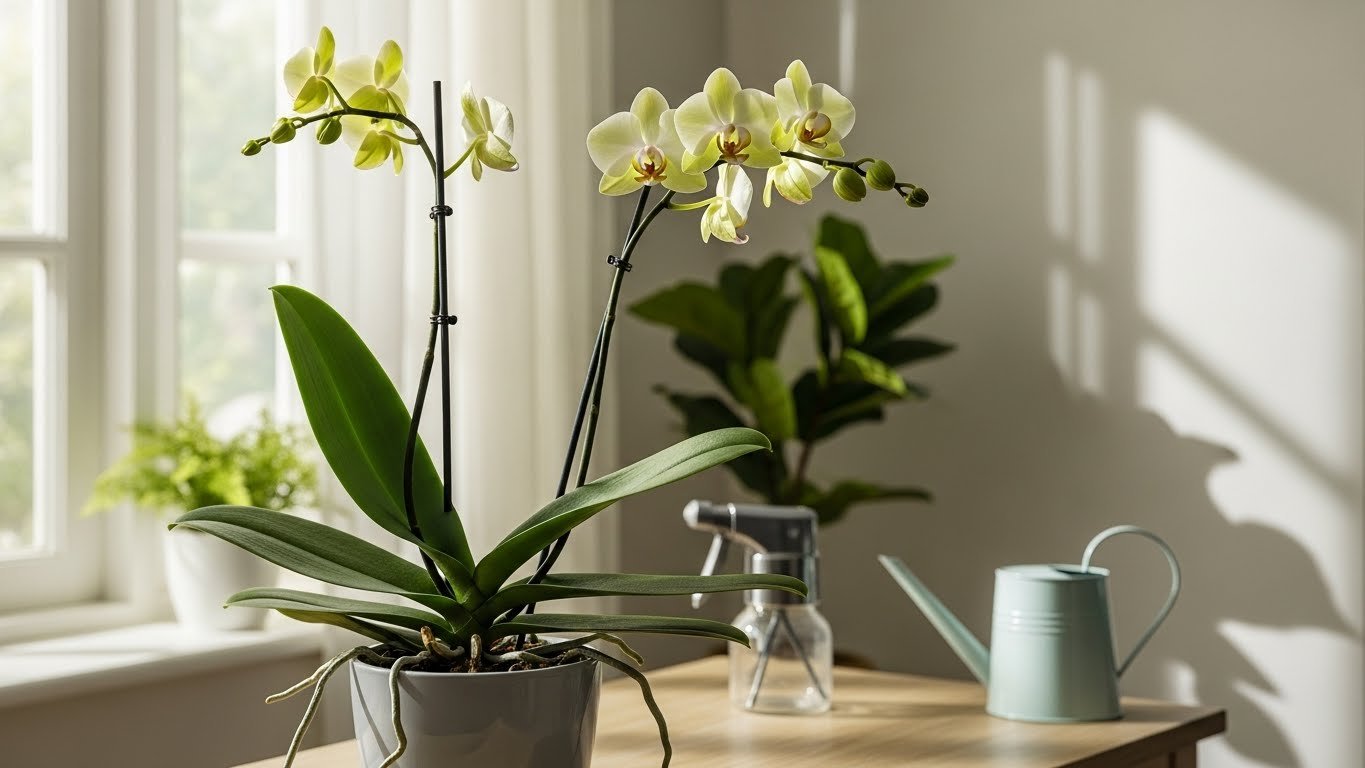
Orchids are among the most elegant and beloved houseplants, admired for their delicate flowers and unique foliage. However, even the most experienced plant lovers occasionally notice that their orchid leaves are drooping. This can be worrying, but understanding the reasons behind drooping leaves can help orchid owners take quick action and restore their plant’s health.
Common Reasons Orchid Leaves Droop
1. Overwatering
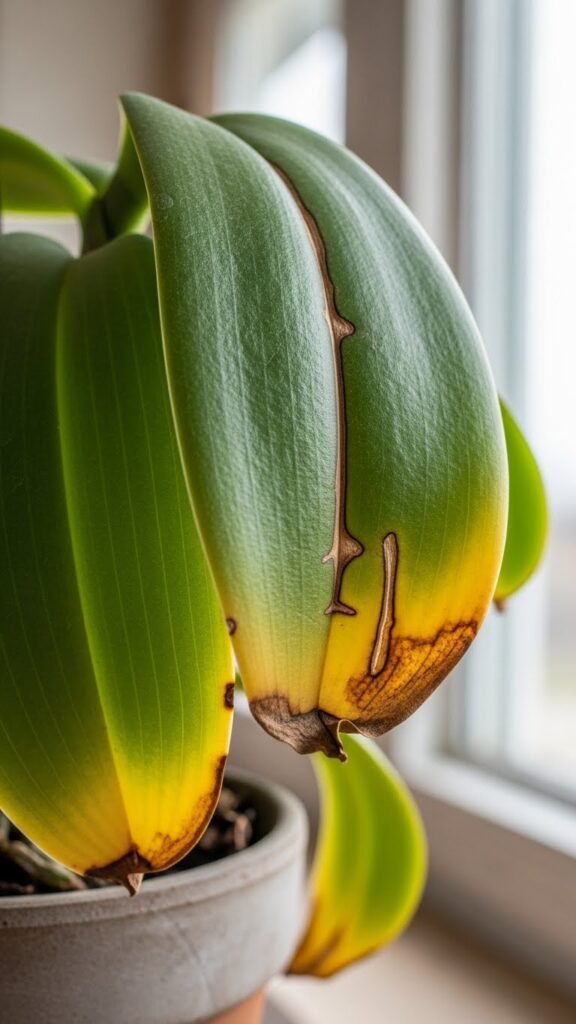
One of the most common causes of drooping leaves in orchids is overwatering. Orchids are sensitive to waterlogged roots, and when roots can’t breathe, the leaves start to sag. While it’s tempting to water frequently, orchids generally prefer to dry out slightly between watering sessions.
2. Underwatering
On the flip side, underwatering can also cause leaves to droop. If an orchid doesn’t receive enough moisture, its leaves lose turgor pressure and start to wilt. Regularly checking the moisture level of the potting medium can prevent this problem.
3. Improper Light
Orchids require bright, indirect light. Too much direct sunlight can scorch the leaves, causing them to droop, while too little light can make leaves weak and limp. Observing the color and firmness of the leaves can help identify if light is the issue.
4. Temperature Stress
Orchids are sensitive to sudden changes in temperature. Leaves may droop if the plant is exposed to drafts, heating vents, or sudden drops in temperature. Maintaining a stable, comfortable environment is key.
5. Root Problems
Healthy roots are the foundation of a healthy orchid. If roots are rotting due to poor drainage or fungal infections, the leaves may droop as the plant struggles to absorb water and nutrients. Regularly inspecting roots when repotting or checking for soft, brown, or mushy roots can prevent serious issues.
6. Nutrient Deficiency
While orchids don’t require heavy feeding, a lack of essential nutrients can cause leaves to droop and look unhealthy. Using a balanced orchid fertilizer in moderation helps keep leaves firm and vibrant.
How to Revive Drooping Orchid Leaves
- Adjust Watering Habits: Make sure you water only when the potting medium is partially dry.
- Check Light Conditions: Move orchids to a location with bright, indirect light.
- Inspect Roots Regularly: Healthy, firm roots indicate a thriving orchid.
- Maintain Temperature: Avoid placing orchids near drafty windows or vents.
- Use Proper Fertilizer: Feed orchids with a balanced orchid fertilizer according to the package instructions.
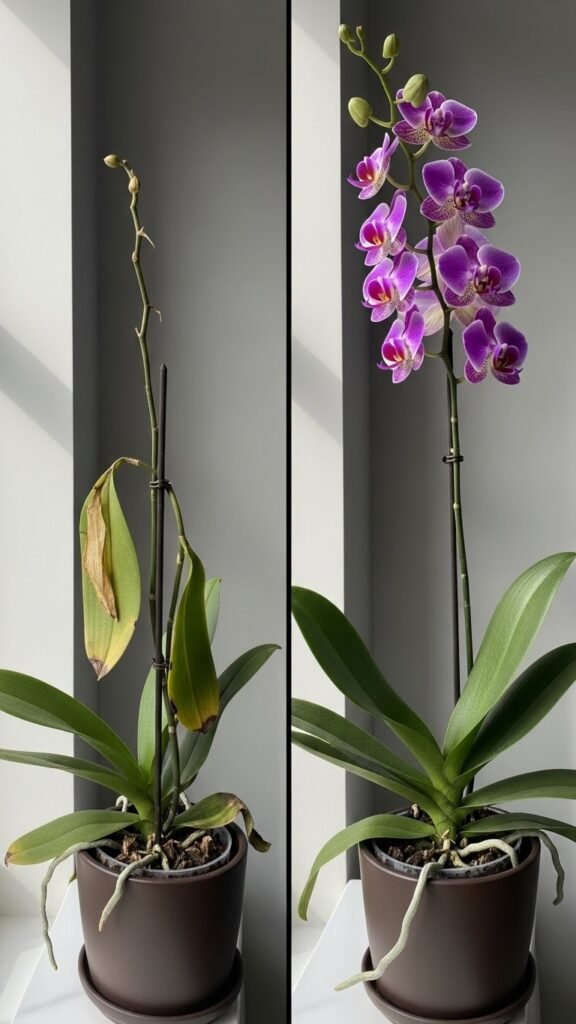
Drooping leaves don’t necessarily mean the end for an orchid. With attentive care and adjustments, orchids can bounce back and continue to grow strong and healthy. Regular observation, proper watering, and ensuring a supportive environment are the keys to keeping your orchid leaves firm, vibrant, and beautiful.