
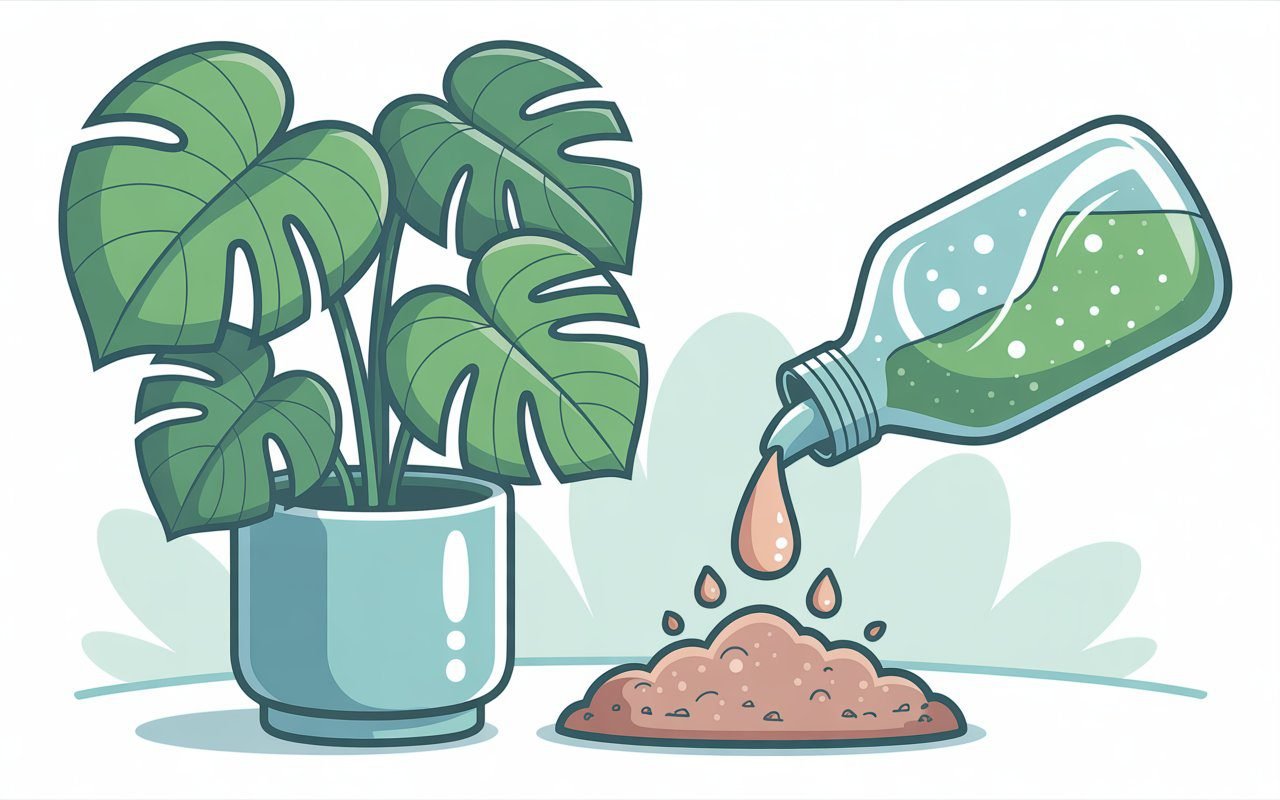
Proper fertilization is a key part of monstera plant care indoor, ensuring lush, vibrant leaves and healthy growth. While Monsteras are relatively low-maintenance, the right fertilizer, applied at the right time, can transform a slow-growing plant into a thriving indoor centerpiece.
This guide explains how to fertilize Monstera plants, including the type of fertilizer, timing, frequency, and common mistakes to avoid. It also links to expert tips on Monstera plant repotting, because repotting often pairs perfectly with fertilization.
Why Fertilizing Your Monstera Matters
Monsteras grow vigorously when they get proper nutrients. Fertilizing supports:
- Larger, glossy leaves
- Faster growth
- Healthy roots
- Better resistance to yellow leaves and pests
Without regular feeding, even a well-watered Monstera may grow slowly or develop pale foliage.
Choosing the Right Fertilizer for Monstera
1. Balanced Liquid Fertilizer
A balanced 20-20-20 or 10-10-10 liquid fertilizer is ideal. Liquid formulas are easily absorbed and allow precise control over nutrient intake.
2. Slow-Release Fertilizer
Slow-release granules are convenient for beginners. They steadily feed the plant over weeks, reducing the risk of over-fertilizing.
3. Organic Options
Organic fertilizers like fish emulsion or seaweed extract promote healthy soil and root microbiome. These are gentle and less likely to burn the plant.
How Often to Fertilize
- Spring & Summer: Every 2–4 weeks for liquid fertilizer or once at the beginning of growth for slow-release types.
- Fall & Winter: Reduce or stop feeding. Monsteras grow slowly during colder months and over-fertilization can harm the plant.
Step-by-Step Fertilizing Process
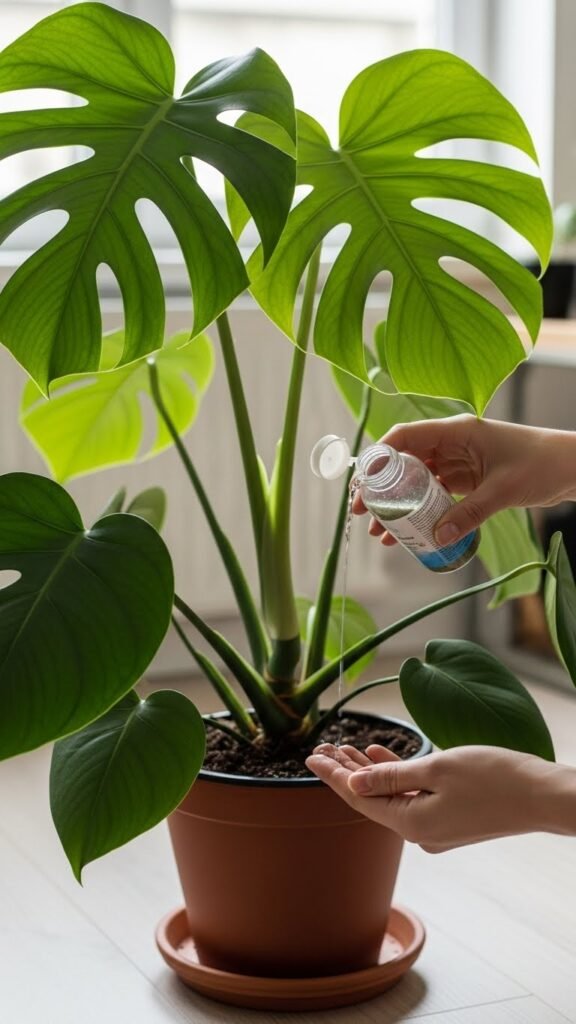
- Water First: Always water your Monstera a day before fertilizing to prevent root burn.
- Dilute Liquid Fertilizer: Use half the recommended strength for indoor plants.
- Apply Evenly: Pour around the base, avoiding direct contact with leaves.
- Observe the Plant: Yellowing leaves or leaf tip burn indicates over-fertilization. Adjust concentration accordingly.
Tips to Maximize Fertilizer Effectiveness
- Combine fertilization with repotting to refresh soil nutrients.
- Use a well-draining, aerated soil mix to ensure roots absorb nutrients efficiently.
- Keep your Monstera in bright, indirect light to help the plant utilize nutrients for growth.
- Consider supplementing with trace minerals if growth is slow despite regular feeding.
Common Mistakes to Avoid
- Over-fertilizing, which can cause leaf burn
- Fertilizing during winter dormancy
- Applying fertilizer to dry soil
- Ignoring the plant’s growth signals (e.g., slow growth, yellowing)
Signs Your Monstera Is Getting the Right Nutrition
- New leaves emerge fully split and vibrant
- Dark green glossy foliage
- Faster stem and root growth
- Overall healthy, upright growth
Conclusion
Proper fertilization is an essential part of monstera plant care indoor. Using the right fertilizer, timing it correctly, and monitoring plant response ensures a healthy, thriving Monstera.
For best results, combine fertilization with proper Monstera plant repotting techniques. Together, these steps create the ideal environment for your plant to flourish.
Healthy leaves, strong roots, and consistent growth are the reward for following these proven fertilization practices.