
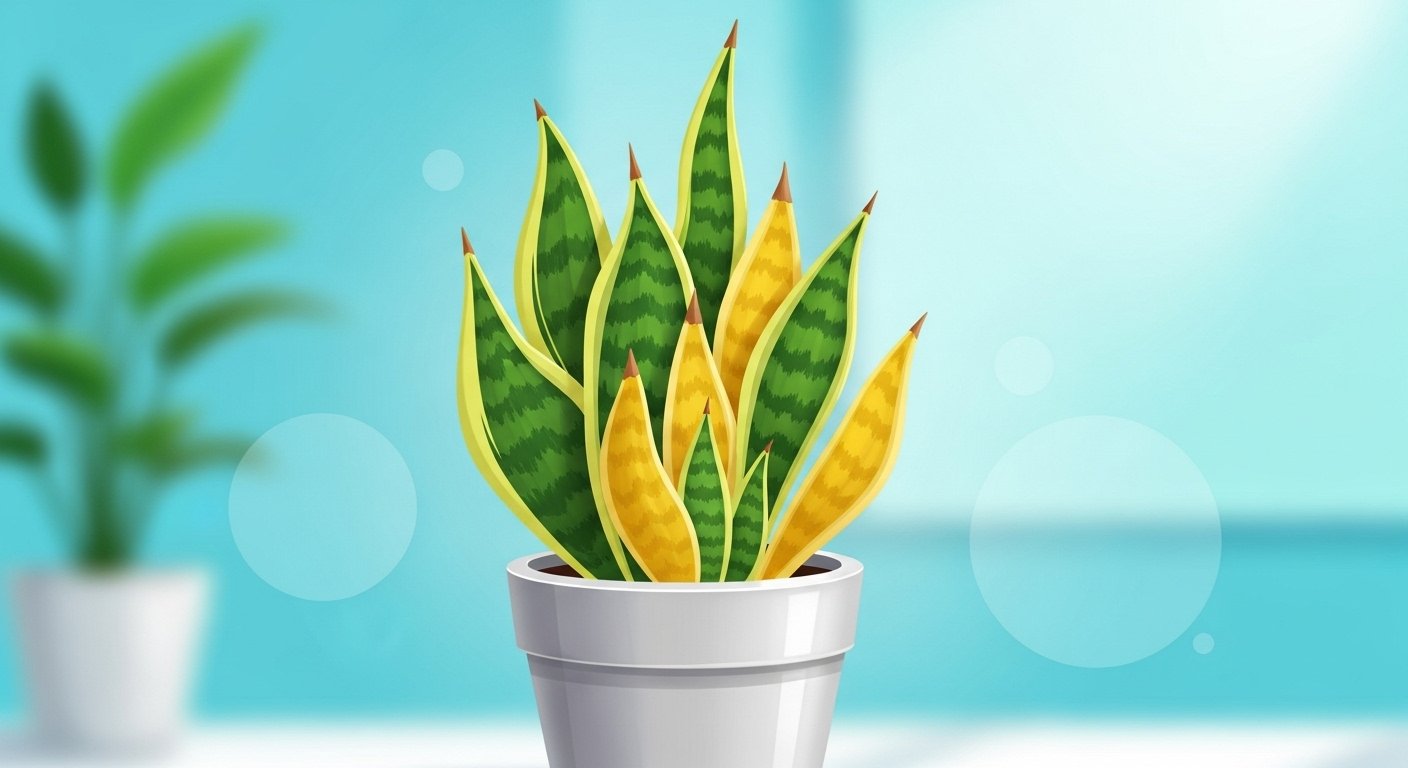
Snake plants (Sansevieria) are known for their hardiness, low maintenance, and striking upright leaves. But if you notice snake plant leaves turning yellow, it’s a sign something isn’t quite right. Yellowing leaves can happen for several reasons — from overwatering to nutrient deficiencies — and catching the problem early can save your plant.
This guide will help you understand why your snake plant is yellowing, how to fix it, and ensure your plant thrives for years to come.
For related care tips, check out our guides on snake plant care tips and snake plant fertilizing.
🌱 Common Causes of Yellow Snake Plant Leaves
- Overwatering
Snake plants are highly susceptible to root rot if watered too frequently. Overwatering can suffocate roots, causing leaves to turn yellow and soft. - Underwatering
While snake plants are drought-tolerant, prolonged neglect can also cause yellowing. Leaves may become dry, brittle, and pale. - Poor Drainage
Using soil that retains too much water or pots without drainage holes can lead to soggy roots and yellowing leaves. - Low Light Conditions
Snake plants tolerate low light but need some indirect sunlight. Leaves may yellow and weaken if kept in too dark of a space. - Nutrient Deficiency
Lack of essential nutrients like nitrogen can cause older leaves to turn yellow. Fertilizer deficiencies can mimic overwatering symptoms. - Pests or Disease
Mealybugs, spider mites, or fungal infections can damage leaves, leading to discoloration.
🌿 Step-by-Step Solutions to Yellow Leaves
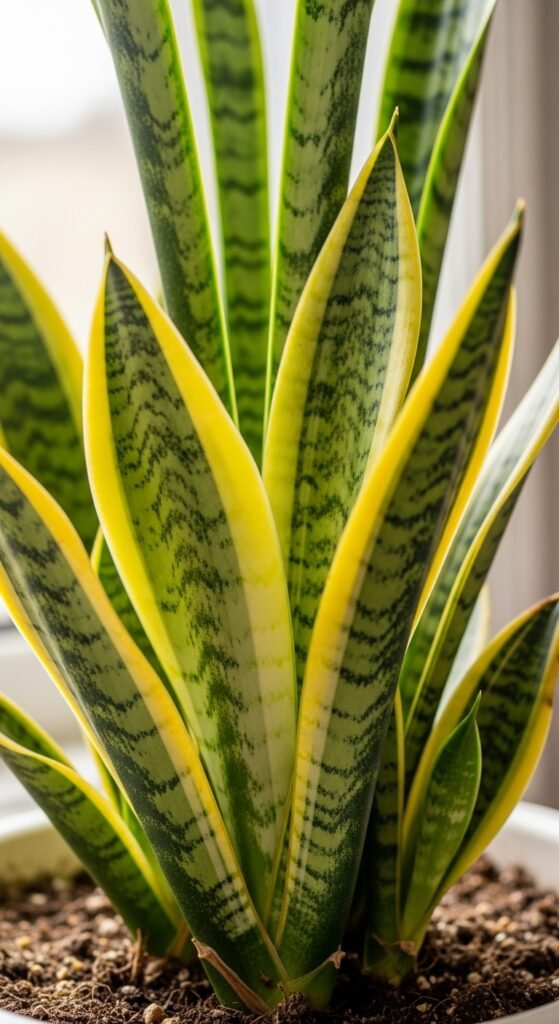
1. Check Your Watering Routine
- Water only when the top 1–2 inches of soil are dry.
- Avoid letting water sit in the saucer or base of the pot.
2. Inspect the Roots
- Remove the plant from the pot and check for mushy or rotten roots.
- Trim any affected roots with sterilized scissors.
- Repot in well-draining soil (like cactus/succulent mix).
3. Improve Drainage
- Make sure your pot has drainage holes.
- Add perlite or coarse sand to the soil mix to increase aeration.
4. Optimize Light Conditions
- Move your plant to a spot with bright, indirect sunlight.
- Avoid harsh direct sunlight that can scorch the leaves.
5. Fertilize Properly
- Feed during growing season (spring/summer) with a balanced houseplant fertilizer or natural fertilizer for snake plants.
- Avoid over-fertilizing, which can burn the roots.
6. Treat Pests and Disease
- Inspect leaves for mealybugs or spider mites.
- Wipe affected areas with rubbing alcohol or neem oil.
- Remove severely damaged leaves to prevent spread.
🌸 Extra Tips for Reviving Yellow Snake Plant Leaves
- Trim Yellow Leaves: Remove yellow leaves at the base to redirect energy to healthy growth.
- Rotate the Plant: Ensure even exposure to light and prevent stress on one side.
- Monitor Humidity: Snake plants prefer dry to moderate humidity — avoid overly damp areas.
🪴 When to Be Concerned
If yellowing continues despite proper care:
- Check for hidden root rot or fungal issues.
- Re-evaluate your potting soil and drainage.
- Consider repotting the plant entirely with fresh soil.
🌿 Preventive Care
- Use a well-draining soil mix (cactus or succulent mix).
- Avoid overwatering — a soil moisture meter can help.
- Provide bright, indirect light for a few hours a day.
- Fertilize moderately with snake plant care fertilizer during the growing season.
By following these steps, you can restore your snake plant’s vibrant green color and prevent future yellowing.